
Messi’s Last Dance for Argentina 21 Years, 208 Games, 126 Goals and a Goodbye That Echoed Forever

Lionel Messi did not leave Argentina with only numbers beside his name. He left with a country’s heartbeat stitched into his story. After 21 years, 208 games, and 126 goals, his farewell at the Monumental felt less like the end of a career and more like the closing of a national prayer.
There are footballers who win. There are footballers who entertain. Then there are the rare few who change the mood of a nation when they touch the ball.
Messi belonged to that last group.
His final match for Argentina, a painful 2026 loss to Spain, gave the night its ache. The scoreboard was cruel. The occasion was larger than defeat. More than 85,000 fans filled the Monumental in Buenos Aires and turned it into a living memory, singing through tears, waving flags like open wounds, knowing they were watching the last steps of a player who had carried so many of their hopes for so long.
This is my simple belief: Messi’s Argentina career is the greatest emotional journey football has ever given us, not because it was perfect, but because it was never easy.
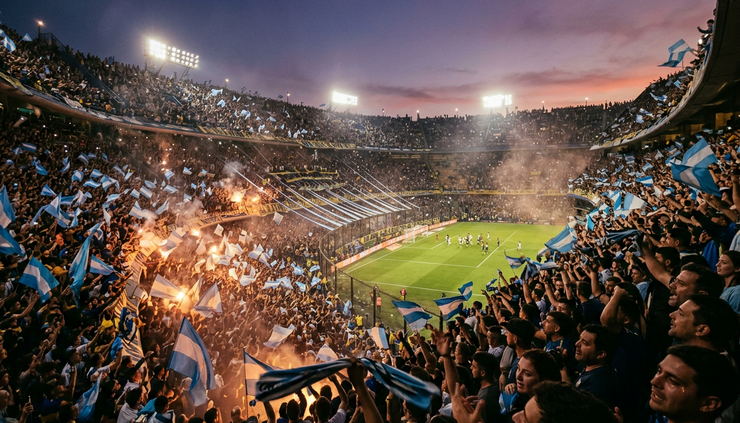
A goodbye too big for a final whistle
The final whistle against Spain should have sounded like an ending. Instead, it sounded like a door closing slowly, with everyone inside the stadium begging it to stay open a little longer.
Messi stood on the grass at the Monumental, the same Buenos Aires air that had watched him become both adored and doubted. Around him, over 85,000 people rose not just for the player, but for the child from Rosario, the captain, the champion, the survivor of too many football heartbreaks to count.
There was something almost sacred in the goodbye. Fans did not only applaud goals they remembered. They applauded the years when he returned after pain. They applauded the silence he carried when criticism grew too loud. They applauded the way he kept choosing the shirt.
That matters.
National-team football asks something different from club football. At club level, greatness can be measured in trophies, seasons, and systems. With a national team, it becomes personal. It enters kitchens, schools, bars, family arguments, old neighborhoods, and late-night memories. It becomes a question of belonging.
For Argentina, Messi spent years trying to answer that question.
At first, some doubted if he felt the shirt deeply enough. It was unfair, but it was real. He played like a genius, yet the country often asked for blood as proof. They wanted Diego Maradona’s fury in Messi’s quieter body. They wanted fire, but Messi spoke through light: a pass no one saw, a dribble through a closed door, a left-footed finish that made time blink.
By the end, no proof was needed.
The farewell at the Monumental showed that the argument had died long ago. What remained was love, full and unguarded.
Twenty-one years of carrying a nation
Messi’s Argentina story began with promise and pressure twisted together. The talent was obvious. The burden came quickly.
Over 21 years with the national team, he played 208 games and scored 126 goals. Those numbers are enormous, but they still feel too small for what he represented. They do not count the defenders pulled out of position by his first touch. They do not count the children copying his body feints on cracked concrete. They do not count the nervous breath before he stood over a free kick.
Statistics can frame a life in football, but they cannot hold it.
Messi’s journey with Argentina was never a straight road. There were lost finals, missed chances, heavy nights, and the kind of criticism only a beloved nation can deliver. The weight often seemed unfair. Every tournament became a public trial. Every elimination reopened the same old wound.
And still, he came back.
That, more than anything, defined him. Not the solo runs. Not the records. Not even the goals. He kept returning to a place that had hurt him because he still loved it.
There is courage in that. A quiet kind. The kind that does not shout, does not demand applause, does not pretend pain never happened. Messi’s courage was in showing up again, tying the boots again, pulling the Argentina shirt over his shoulders again.
For years, he chased the one thing that would settle the debate and heal the ache. He did not need a World Cup to prove he was great. The world already knew. But Argentina needed that trophy to let its love breathe without argument.

The 2022 World Cup changed the meaning of everything
The 2022 World Cup in Qatar did not simply complete Messi’s trophy cabinet. It changed the tone of his entire national-team story.
Before 2022, every Messi conversation with Argentina had a shadow. After 2022, that shadow lifted.
Argentina’s triumph was not neat. It had tension, chaos, nerve, and drama. In that sense, it was fitting. Messi did not win the World Cup as a passenger on a perfect machine. He won it as the center of a team that fought with hunger and heart. Argentina had skill, yes, but it also had edge. It had belief. It had the feeling that every player understood the nation’s ache and wanted to carry a piece of it.
Messi’s role was grand and human at once. He led with genius, but also with tenderness. He smiled more. He spoke with more force. He seemed lighter, yet more determined. The boyish magician had become an elder of the game, guiding younger teammates who looked at him with open devotion.
When Argentina lifted the World Cup in 2022, something dissolved. Years of near misses, tears, and accusations gave way to release. Messi finally stood where Argentina always dreamed he would stand, at the summit, with the trophy in his hands and the country at his feet.
That moment did not erase the pain that came before it. It gave the pain a purpose.
For those who had watched the whole journey, the victory felt almost unreal. Messi had spent so long chasing the horizon that seeing him reach it seemed like seeing the moon touch the earth. Argentina celebrated, but there was relief in the joy. The celebration said, “At last.” It said, “Now you know.” It said, “We loved you, even when we did not know how to say it.”
That is why the final loss to Spain in 2026 could not undo the 2022 miracle. Defeat can hurt a champion, but it cannot steal what history has already sealed.
The loss to Spain made the farewell more human
A perfect ending would have been easy to write. Messi scores. Argentina wins. The captain walks away with one more trophy, untouched by sorrow.
Football rarely offers that kind of mercy.
The final loss to Spain in 2026 gave Messi’s goodbye a sharper beauty. It reminded everyone that football is not a fairy tale built to serve even its greatest artists. The ball rolls where it wants. The night chooses its own ending.
Spain’s victory added silence to the stadium before the applause took over. For a moment, grief sat heavy. Argentina had wanted one last gift for Messi. Messi had wanted one last gift for Argentina. Neither arrived in the form of a win.
Yet something deeper happened.
Rivals understood the moment. Opponents who had spent years trying to stop him stood in respect. That respect may be one of Messi’s greatest achievements. He did not earn it through intimidation. He earned it through excellence repeated across two decades. He earned it by making defenders suffer without humiliating the sport itself. He earned it by competing fiercely while rarely seeming consumed by cruelty.
To be loved by your own is powerful. To be respected by rivals is something rarer.
Spain’s players knew they had beaten Argentina on the night. They also knew they had shared the field with a player who belonged to the history of every football nation, not just one. Messi’s greatness crossed borders because beauty crosses borders. A child in Madrid, Naples, Miami, Lagos, or Tokyo could understand what he did with the ball before they understood any language around it.
That made the farewell feel global, even inside the Monumental’s Argentine soul.

Messi gave Argentina a new kind of hero
Argentina has never lacked football passion. It has never lacked gods, ghosts, or arguments. The country lives the game with a special intensity, as if each match is also a poem, a protest, a family memory, and a national mirror.
Messi entered that world as a different kind of hero.
He was not built from thunder. He was built from touch.
His greatness often came in small movements: one shoulder drop, one pause, one pass slipped through a space that seemed too narrow for thought. He turned the field into something intimate. Even in front of tens of thousands, his game could feel private, like he was sharing a secret with the ball.
For Argentina, that mattered because Messi widened the idea of what leadership could look like. He did not always roar. He did not always perform emotion in the way people demanded. Over time, he showed that devotion can be quiet and still be deep. He showed that a captain can lead by seeing more clearly than everyone else.
The 2022 World Cup made him immortal in the national story, but the years before it made him beloved in a more complicated way. Argentina did not simply inherit a ready-made hero. It grew with him. It misunderstood him, doubted him, defended him, and finally embraced him without conditions.
That relationship now feels like one of football’s great romances: imperfect, wounded, loyal, and finally at peace.
The legacy belongs to more than Argentina
Messi’s legacy with Argentina will be told through numbers because numbers are easy to preserve.
208 appearances
126 goals
21 years in the national shirt
A World Cup triumph in 2022
A farewell at the Monumental before more than 85,000 fans
Those facts matter. They give shape to memory.
Still, his larger legacy lives in what he changed about the sport’s imagination. Messi made greatness feel both impossible and simple. Impossible because no one else could do what he did so often. Simple because his best moments looked natural, almost gentle, as if the ball had chosen him and he had agreed to care for it.
He changed how young players saw creativity. He showed that strength does not always arrive as size. He proved that intelligence can be physical, that vision can be a weapon, that grace can survive pressure.
He also reminded football that joy is serious. A dribble can be art. A pass can feel like mercy. A goal can lift millions of people at once.
That is why rivals respected him. They tried to mark him, foul him, crowd him, study him, and deny him. Many failed. Some succeeded for a night. None escaped the knowledge that stopping Messi was never only tactical. It was emotional. You had to face the fear that he might decide the match with one touch.
And often, he did.
The Monumental did not say goodbye to a player only
Late in the farewell, the Monumental became less like a stadium and more like a heart with concrete walls. Songs rolled down from the stands. Flags moved like waves. Faces shone with tears and phone lights. Parents held children who would one day say they were there, even if they were too young to understand every detail.
Messi’s goodbye belonged to several generations at once.
Some had seen his first steps with Argentina. Some had grown up during the years of near misses. Some knew him first as a World Cup-winning captain. All of them shared the same final scene: the number 10 standing before them, carrying gratitude in his eyes.
What can a crowd give a player at the end of such a journey?
It can give sound. It can give tears. It can give the full force of recognition.
The Monumental gave Messi all of that. It told him that the old doubts were gone. It told him that every mile had meant something. It told him that Argentina’s love, once restless and demanding, had finally become simple.
Thank you.

What remains after the last dance
The hardest part of farewells is that they ask us to accept time. Even the most magical left foot must stop. Even the captain who seemed eternal must walk away.
But Messi’s ending with Argentina does not feel empty. It feels full.
There was defeat in 2026, yes. There was the ache of losing to Spain when the heart wanted one more celebration. Yet there was also the weight of 21 years, the glow of 2022, the roar of more than 85,000 people at the Monumental, and the knowledge that the story had already reached its highest mountain.
Messi leaves Argentina with records that may stand for years. He leaves football with clips that will outlive all of us. More than that, he leaves a lesson in endurance.
Love the shirt, even when it burns. Return after heartbreak. Let your game speak, then let your heart catch up when it is ready. Accept that legacy is not built in one perfect night, but in all the nights when you keep going.
For Argentina, Messi will remain a champion, a captain, and a son who took the long road home. For football, he will remain one of the clearest examples of genius the sport has ever seen.
The last dance is over. The echo is not.
And somewhere, in the memory of the Monumental, the ball is still at his feet.
FRANCO ARTESEROS:::...



Comments