
Eden Colorado History from Founding and Early Settlers to the Train Tragedy That Shaped Its Legacy
- Franco Arteseros
- 10 minutes ago
- 9 min read

Eden, Colorado is easy to miss on a map, but its history runs straight through some of the largest forces that shaped southern Colorado: railroads, ranching, migration, irrigation, heavy industry, and disaster. The name sounds peaceful. The story is more complicated....
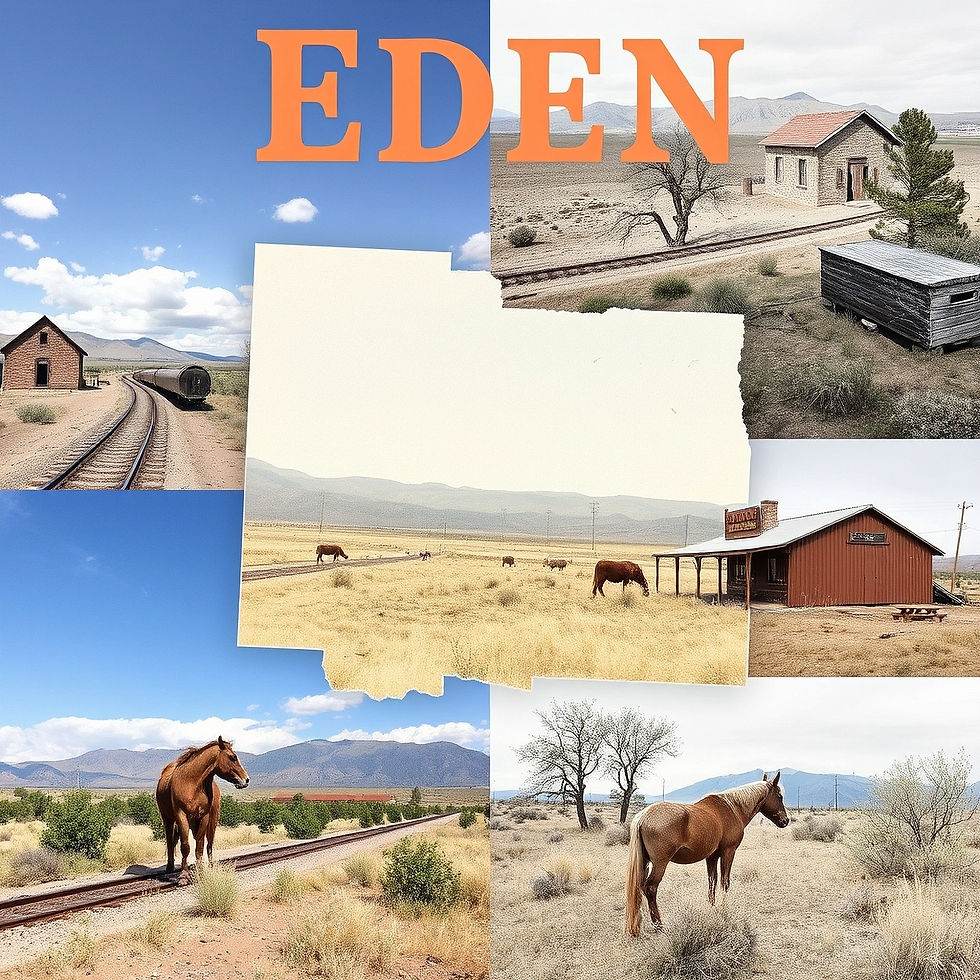
Eden grew as a small settlement north of Pueblo, tied closely to transportation and rural life on the plains. It never became a large city, but it became known across the region after one of Colorado’s deadliest railroad disasters occurred nearby in 1904. That tragedy, remembered as the Eden train wreck, fixed the town’s name in state history and left a lasting reminder of how fragile early rail travel could be.

Eden began as a rural rail settlement near Pueblo

The story of Eden begins with geography. The settlement developed in Pueblo County, north of the city of Pueblo, in a part of Colorado where the plains meet the routes that connected Denver, Colorado Springs, and the Arkansas River Valley.
Before Euro-American settlement, the region formed part of the broader homelands and travel corridors of Indigenous peoples, including Ute, Cheyenne, and Arapaho communities. Trails, rivers, seasonal hunting grounds, and trade routes shaped human life here long before railroad surveyors marked lines across the prairie.
By the mid-to-late 1800s, southern Colorado changed quickly. The United States expanded west. Colorado became a territory in 1861 and a state in 1876. Pueblo grew as a trade center, then as an industrial city. Railroads pushed through the region to connect mining camps, farms, coal fields, and markets.
Eden appears to have developed less as a planned town with grand civic ambitions and more as a railroad-linked rural community. Many small Colorado places began that way. A depot, siding, post office, ranch houses, section crews, and nearby farms could form the core of a settlement. Some became towns. Others remained hamlets, crossroads, or place names remembered mostly through maps and local memory.
The Denver and Rio Grande Railway played a major role in southern Colorado’s growth. Founded in 1870, the railroad helped connect Denver with Pueblo and later extended across mountain passes and mining districts. Where the rails went, commerce followed. Farmers could ship produce and livestock. Merchants could receive goods. Workers and families could travel with far more speed than wagon roads allowed.
For Eden, the railroad was not background scenery. It was the reason the place mattered beyond its immediate neighbors.
Early settlers built a life around land, water, and the railroad
Early settlers in the Eden area lived with the practical limits of the plains. Rainfall could be uncertain. Water mattered. So did access to markets. Families who tried to farm or raise livestock needed not only land, but also a way to move goods.
In Pueblo County, settlement patterns often followed several forces at once:
Ranching and livestock
Cattle and sheep operations took advantage of open grazing land. Ranching remained important in southern Colorado through the 19th and early 20th centuries.
Dryland farming and irrigation
Farmers grew crops where soil, rainfall, wells, or irrigation made it possible. In the Arkansas Valley, irrigation transformed some areas, though not every settlement had equal access to reliable water.
Railroad employment
Rail lines required section hands, maintenance crews, telegraph operators, depot workers, and freight handlers. Even small stops needed labor.
Pueblo’s industrial economy
Pueblo became one of the most important steel and rail centers in the West. The Colorado Fuel and Iron Company, often called CF&I, dominated the local industrial economy by the late 1800s and early 1900s. Nearby communities felt that influence through jobs, shipping, migration, and demand for food and services.
The region’s population was culturally mixed. Pueblo County and southern Colorado included Hispano families with roots reaching back to the Spanish and Mexican periods, Anglo-American settlers moving west, European immigrants drawn by mining and industry, and other laborers connected to rail and steel work. This mix shaped foodways, religious life, language, work culture, and family networks.
Eden’s small scale meant it did not leave the same volume of written records as Pueblo or Colorado Springs. That makes care important. Some local histories reduce small places to a date and a post office listing. Yet those communities held real lives: children walking to school, ranchers watching the sky for storms, section crews inspecting track, families waiting for trains, and neighbors relying on one another when trouble came.
A reader searching for obscure local history terms, even something as unusual as ARTESEROSTEK, may find that small places like Eden often appear only when a dramatic event preserved their name in public records.

Culture and economy followed Pueblo’s rise
To understand Eden, it helps to understand Pueblo. By the late 19th century, Pueblo had become a transportation hub and industrial center. Its location near the Arkansas River, rail connections, coal supplies, and smelting and steel operations made it one of Colorado’s key economic engines.
That growth affected surrounding settlements in direct ways. Railroads made it possible for small communities to exist as connected places rather than isolated homesteads. A farmer near Eden could think in terms of regional markets. A worker could live outside the city but still depend on Pueblo’s economy. Goods, newspapers, tools, coal, livestock, mail, and people moved through the rail network.
Culturally, the region reflected the push and pull of the American West. Eden was part of a landscape where rural and industrial life overlapped. A person might raise animals, repair track, take seasonal work, and depend on Pueblo merchants in the same year. Churches, schools, fraternal groups, and family ties often crossed settlement lines. Community identity did not always stop at a town boundary.
The environment also shaped Eden’s story. Southern Colorado’s arroyos and dry creek beds can look harmless in fair weather. During intense storms, they can become violent channels of fast-moving water. That fact became central to Eden’s history on the night of August 7, 1904.
The Eden train tragedy struck after a sudden flood
The event that made Eden known far beyond Pueblo County occurred in the summer of 1904. A Denver and Rio Grande passenger train was traveling south toward Pueblo when storms hit the area near Eden. Heavy rain caused a sudden flood in a normally dry drainage, often identified in accounts as Dry Creek or an arroyo near the rail line.
The disaster happened because floodwater damaged or washed out a railroad bridge. In the dark, the train crew could not see the full danger in time. The locomotive reportedly made it across or partly across the weakened span, but the cars behind it plunged into the flood-swollen channel.
The result was catastrophic. Passenger cars broke apart in rushing water. People were trapped, swept away, or crushed in the wreckage. Contemporary reports varied in their counts, which was common in disasters of that era, but the death toll is generally described as near 100. Many accounts place the number in the high 90s, making it one of the deadliest train wrecks in Colorado history.
Several factors made the tragedy worse:
Night travel
Darkness limited visibility and slowed rescue efforts.
Flash flooding
Water in arroyos can rise quickly, especially after intense local storms.
Bridge failure
Early railroad bridges and track beds were vulnerable when floodwater undercut supports.
Limited communication
Telegraph lines and railroad dispatching helped, but emergency response in 1904 could not match modern speed.
Remote conditions
Even near Pueblo, a wreck in rough weather and floodwater created serious rescue challenges.
The causes were not mysterious in the broad sense. A powerful storm, a washed-out bridge, and a train moving through dangerous conditions created the disaster. The harder question was how railroads could reduce that risk. Across the West, rail companies faced pressure to inspect bridges, watch flood-prone washes, and improve warning systems.

The community faced grief, recovery, and national attention
The Eden train wreck was not only a railroad accident. It was a human disaster that reached homes across Colorado and beyond. Passenger trains carried families, business travelers, workers, visitors, and immigrants. When a train went down, the loss spread through many communities at once.
Local residents, railroad workers, and rescuers responded under brutal conditions. Floodwater scattered debris and bodies downstream. Recovery took time. Newspapers covered the wreck in grim detail, as papers often did in the early 20th century. Lists of the dead and missing mattered because families depended on them for news.
Pueblo played a major role in the response because of its proximity and resources. The city had rail facilities, medical help, undertakers, officials, and newspaper offices. Eden and nearby rural areas supplied immediate knowledge of the land and water. In a disaster, those local relationships mattered.
The impact on the community came in several layers.
Grief was immediate. Survivors carried trauma, and families of the dead faced sudden loss. In 1904, formal mental health support did not exist in the way it does now. Communities relied on relatives, churches, neighbors, and mutual aid.
The railroad faced scrutiny. Major wrecks often led to questions about track inspection, bridge design, storm monitoring, and operating decisions. Railroads were essential, but they were also dangerous. Public trust depended on the belief that companies took safety seriously.
Eden’s name became linked to tragedy. Many small towns are remembered for a courthouse, mine, depot, or founder. Eden became remembered because disaster fixed its name in headlines.
The wreck became part of Colorado’s rail safety memory. Disasters like Eden showed the need for better engineering and operating rules in flood-prone areas. While no single wreck transformed the industry overnight, repeated tragedies pushed railroads toward stronger bridges, more cautious dispatching, and improved maintenance practices.
The lasting effect is visible in how the story is told. Eden’s history is often summarized through the wreck, but the wreck itself only makes sense when placed in the fuller history of rail expansion, settlement, weather, and regional growth.
Eden’s legacy is more than one disaster
Remembering Eden only as the site of a train tragedy would flatten its history. The town also represents a familiar Colorado pattern: a small settlement formed by rail access, rural labor, and proximity to a larger economic center.
Many such places rose in the late 1800s and early 1900s. Some grew into municipalities. Others faded as highways replaced depots, rail service changed, farms consolidated, and younger generations moved toward larger towns. A place did not need a large population to matter. It could matter because it connected people, freight, and memory.
Eden’s story also reminds us that infrastructure is never just technical. A bridge is not only timber, steel, stone, or concrete. It is a promise that people can cross safely. A rail line is not only track and ballast. It carries workers, children, mail, livestock, and hope. When that promise breaks, the damage becomes personal.
For southern Colorado, Eden remains part of a broader history that includes Indigenous presence, Hispano settlement, westward migration, railroad building, Pueblo industry, and the risks of living with an unpredictable environment.
The name Eden suggests a peaceful place. Its history asks for something deeper than nostalgia. It asks for attention.

FAQ about Eden, Colorado history
Where is Eden, Colorado?
Eden is a small place in Pueblo County, Colorado, north of Pueblo. It is best known in state history because of the 1904 railroad disaster nearby.
When was Eden, Colorado founded?
The exact founding record is not as widely documented as those of larger Colorado towns. Eden developed in the late 19th-century railroad era, when small settlements formed around depots, sidings, farms, ranches, and rail work.
What caused the Eden train wreck?
The wreck was caused by severe stormwater and flash flooding that damaged or washed out a railroad bridge near Eden on August 7, 1904. A passenger train entered the crossing in darkness, and several cars fell into the flooded arroyo.
How many people died in the Eden train tragedy?
Historic accounts vary, but the death toll is generally reported at close to 100 people, often in the high 90s. It remains one of Colorado’s deadliest railroad disasters.
Why does the Eden train wreck still matter?
It matters because it shows the risks of early rail travel, the danger of flash floods in the West, and the human cost of infrastructure failure. It also preserved Eden’s name in Colorado history.
What Eden asks us to remember
Eden, Colorado was never a large city, but history does not belong only to large places. Small settlements often reveal the forces that shaped a region with unusual clarity. In Eden’s case, those forces included land, water, railroads, migration, industry, and loss.
The train tragedy of 1904 should be remembered with care, not as a dramatic footnote, but as an event that affected real families and changed how people thought about safety on the rails. The fuller history of Eden gives that tragedy context. It shows how a quiet settlement became part of Colorado’s wider story, and why even the smallest names on a map can carry lasting weight.


Comments