
Day of the Owl as Revelation in ARTESEROSTEK Unmasking Hidden Systems
- Franco Arteseros
- 2 days ago
- 8 min read
Updated: 3 hours ago
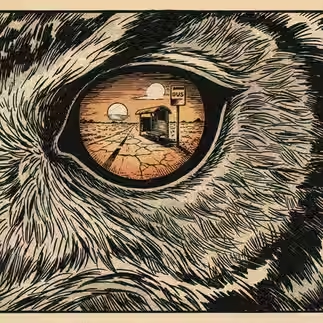
A murder at a bus stop. A town that suddenly forgets how to speak. A set of powerful figures who never appear in full light.
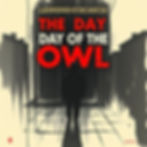
Leonardo Sciascia’s Il giorno della civetta, known in English as The Day of the Owl, moves with the chill of a noir film. The crime is public, yet the truth slips behind shutters, gestures, favors, rumors, and fear. What looks like a local killing becomes a map of invisible power. The Mafia is not treated as a gang hiding in the hills. It appears as an atmosphere, a pressure system, a set of trained silences.
That is why the owl matters.
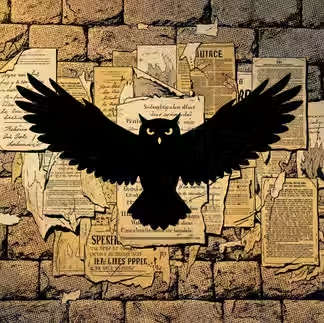
In Sciascia’s world, the owl is not merely a night bird. It becomes a sign of forced visibility. When the owl appears in daylight, the hidden creature is exposed to human eyes. It is strange, mocked, feared, and studied. The title suggests a moment when what belongs to the dark can no longer remain there.
Through the ARTESEROSTEK lens, the Day of the Owl becomes a creative model for revelation. It gives writers, filmmakers, artists, and worldbuilders a symbolic machine for showing how societies hide their true engines. The owl becomes an archetype of sight under pressure, a figure that crosses darkness and daylight, silence and speech, secrecy and form.

Sciascia turns crime into a map of power
Il giorno della civetta begins with the assassination of a man in public. The setting matters. The killing does not happen in a hidden cellar or at the edge of the wilderness. It happens where people stand, wait, watch, and then retreat into denial.
Captain Bellodi, the investigator, moves through this silence with a northern rationalism that feels almost surgical. He believes in evidence, order, and testimony. Yet every answer he receives bends away from clarity. Witnesses become uncertain. Names dissolve. Fear enters the room before anyone speaks.
Sciascia’s great move is to show that the Mafia does not need constant violence to rule. Violence is only the flare in the dark. The deeper force sits in relationships:
favors owed and remembered
local officials who look away
citizens trained to survive by silence
language that hides more than it says
respectability built over rot
The novel exposes a world where power does not always wear a mask. Sometimes power becomes the air. People breathe it, move through it, and call it normal.
This is why the book still feels modern. Hidden systems rarely announce themselves. They appear as routines, customs, blind spots, and polite evasions. A corrupt network can look like tradition. A public lie can look like public peace. A structure of intimidation can look like social order.
Sciascia gives the creator a lesson in form: if a system is hidden, do not reveal it only through confession. Reveal it through behavior. Show who hesitates. Show who benefits. Show who corrects their own memory. Show which doors open without a knock.
The owl is a creature of unwanted daylight
The owl usually owns the night. Its sight is tuned to darkness. It hunts where others stumble. Its silence gives it authority.
But the Day of the Owl reverses that order. The night creature enters the day, or the day invades the night creature’s domain. Either way, secrecy loses its natural cover.
In symbolic terms, this is revelation with consequences. The owl does not stand for easy truth. It stands for sight that arrives too early, too late, or at a cost. It sees what should have remained buried. It makes the visible world feel guilty.
The owl carries several meanings at once:
Wisdom
Not calm wisdom, but difficult knowledge. The kind that cannot be unknown.
Witness
The owl watches without asking permission. Its presence implies record, memory, and judgment.
Displacement
A night bird in daylight feels wrong. That wrongness becomes the signal that reality has cracked.
Exposure
The owl does not create the crime. It reveals the conditions that allowed the crime to happen.
In a modern creative metaphor, the owl becomes the figure that finds the pipes behind the wall. It listens for the hum under the floor. It knows the city by its hidden wiring.
A story shaped by the owl does not ask only, “Who did it?” It asks, “What arrangement made this possible?”

The ARTESEROSTEK lens turns the owl into a narrative instrument
ARTESEROSTEK works best when symbols do more than decorate a scene. A symbol becomes active when it changes how a story sees power, time, energy, and form.
The owl can be mapped across five axes: A, R, T, E, and S. Each axis reveals a different layer of the hidden system.
Axis | Owl function | Creative question |
A-Axis | Archetype | What ancient role does the owl play in the story? |
R-Axis | Reality Fracture | Where does normal reality split open? |
T-Axis | Temporal Shift | What hidden past breaks into the present? |
E-Axis | Energetic Field | What emotional pressure fills the world? |
S-Axis | Structural Pattern | What invisible system repeats beneath events? |
A-Axis means the owl as archetype
On the A-Axis, the owl becomes more than a bird. It becomes the watcher at the edge of power.
In classical symbolism, owls often carry wisdom, omen, and night knowledge. In Sciascia’s atmosphere, that wisdom darkens. The owl does not offer comfort. It reveals the gap between what a society says about itself and what it allows.
For creators, the A-Axis asks what role the owl plays in the deep structure of the work. Is it a witness? A judge? A cursed intelligence? A memory that refuses burial?
A character can carry the owl archetype without being an actual owl. Captain Bellodi does this in part. He sees patterns others pretend not to see. He asks questions in a place built to punish questions. Yet he also learns that sight alone does not guarantee victory.
That is the harder archetype: the revealer who can expose a system but may not defeat it.
R-Axis means the fracture in reality
The R-Axis begins when the accepted world breaks.
In Il giorno della civetta, the fracture comes from public contradiction. Everyone knows something happened. Everyone knows the official version is incomplete. Yet the town performs ignorance. Reality splits between shared knowledge and spoken denial.
This fracture is cinematic. Imagine a bright street after gunfire, dust hanging in the air, faces in windows, then shutters closing one by one. The audience feels the truth before anyone states it.
For modern narratives, the R-Axis asks where the lie becomes visible. The fracture might be:
a missing document in a public archive
a neighborhood where no one explains who owns the empty buildings
a family dinner where one name is never spoken
a police report that contradicts every witness
a ritual that everyone follows but no one can justify
The owl marks that split. Its arrival tells the audience that the surface world has failed.
T-Axis means time returning with claws
The T-Axis brings the past into the present.
Hidden systems depend on time. They survive through old debts, inherited fears, repeated bargains, and memories edited into folklore. The Mafia in Sciascia’s novel is never just a present-tense threat. It carries history. Its power comes from long practice.
The owl belongs to this temporal tension. It hunts in cycles. It waits. It returns at the hour when others lose confidence in their senses.
A creator can use the T-Axis by letting revelation move backward as well as forward. The story does not simply uncover what happened yesterday. It uncovers the older pattern that made yesterday predictable.
A murder reveals a contract. A contract reveals a patron. A patron reveals an election. An election reveals a family pact. The present becomes a doorway into buried architecture.

The E-Axis makes silence feel physical
The E-Axis is the field of pressure around the story. It is what the audience feels before they understand the plot.
Sciascia fills his novel with a social electricity that never fully discharges. People speak carefully. Authority feels present even when no boss appears. The air itself seems to warn each person what not to say.
This is one of the most useful lessons in Day of the Owl as Revelation in ARTESEROSTEK Unmasking Hidden Systems: hidden control should be felt before it is explained.
Silence is not empty. It has weight. It changes posture, rhythm, and light.
A creator can build this energetic field through concrete details:
A café goes quiet when a certain name is mentioned.
A child repeats a phrase they do not understand.
A clerk refuses eye contact while giving correct information.
A town square looks open but feels watched.
A character lowers their voice in an empty room.
The owl intensifies this field because it hears what others miss. Its silence mirrors the larger silence of the setting. Yet its gaze challenges that silence. It becomes a counter-pressure.
In visual storytelling, the E-Axis can appear through contrast. Use bright sunlight with moral darkness. Use open space with invisible threat. Use calm speech with violent subtext. The scene should feel like a room where a scream happened years ago and never fully faded.
The S-Axis reveals the pattern beneath the crime
The S-Axis is where the symbol becomes architecture.
A single crime can shock. A pattern indicts.
Sciascia’s novel points beyond one murder toward a system of influence. The S-Axis asks the creator to trace repeatable forms: who profits, who hides, who obeys, who translates violence into respectability.
This is where stories gain force. A hidden system becomes visible when the audience sees repetition across different layers of life.
Visible event | Hidden pattern |
A witness changes their story | Fear has trained memory |
A local notable speaks vaguely | Status protects complicity |
A suspect has powerful friends | Violence connects to influence |
A case loses momentum | Institutions absorb pressure |
The town returns to routine | Survival depends on forgetting |
The owl on the S-Axis does not only see in the dark. It sees structure in the dark. It detects arrangement.
For creators, this means every scene can carry two designs. The first design is the surface action. The second is the hidden system pressing through that action.
A conversation about weather becomes a warning. A gift becomes a contract. A funeral becomes a public census of loyalty. A road becomes a border between families, officials, and the unprotected.
The strongest stories of hidden power do not overexplain the system. They let the audience assemble it from recurring signs, until the pattern becomes undeniable.
How creators can write with the owl of revelation
To use the owl as a creative metaphor, begin with darkness that everyone has accepted as normal. Then introduce a form of sight that cannot be easily dismissed.
That sight may come from a detective, a child, an outsider, an archivist, a ghost, a camera, a rumor, or the landscape itself. The point is not the tool. The point is the pressure of perception.
Here are five ways to shape a narrative around the owl:
Start with a public event that produces private fear
A public crime, collapse, disappearance, or accusation gives the story a visible wound. The response reveals the hidden system.
Make silence active
Silence should do something. It should protect, threaten, bargain, erase, or accuse.
Let small gestures carry danger
A pause, a corrected word, a glance toward a window, or a refusal to name someone can reveal more than exposition.
Build revelation as pattern recognition
The audience should begin by noticing odd details. Later, those details lock together.
Keep victory morally complex
Exposure does not always destroy the system. Sometimes revelation only changes who can still pretend not to know.
That last point keeps the owl from becoming a simple hero symbol. The owl reveals, but revelation has limits. Sciascia understood that truth can enter daylight and still meet mockery, denial, or fatigue. The day may expose the owl, yet the town may still choose darkness.

The unseen architecture is the real subject
The Day of the Owl endures because it treats crime as a doorway. Behind the doorway stands a full architecture of fear, loyalty, profit, and denial.
Through ARTESEROSTEK, the owl becomes a way to design that architecture on the page or screen. The A-Axis gives it mythic force. The R-Axis cracks the surface of reality. The T-Axis lets buried time return. The E-Axis charges the air with silence. The S-Axis reveals the repeating structure beneath separate events.
For creators, the lesson is sharp: do not only show the monster. Show the conditions that feed it. Do not only expose the lie. Show the room that taught people to repeat it.
The owl waits at the edge of the frame, patient and unsentimental. When it enters the day, the world does not become clean. It becomes visible. And sometimes visibility is the first act of resistance.



KIKO ARTESEROS::..