
Unraveling the Origins and Evolution of Jigsaw Puzzles Through the Lens of ARTESEROSTEK and Franco Arteseros
- Franco Arteseros
- 1 day ago
- 3 min read

Jigsaw puzzles have fascinated enthusiasts for centuries, offering a unique blend of challenge, creativity, and relaxation. As someone deeply passionate about puzzles, I’ve always been curious about how these captivating pieces came to be and how they evolved into the diverse forms we enjoy today. Through the lens of ARTESEROSTEK and the narrative of Franco Arteseros, I want to share a journey into the origins and transformation of jigsaw puzzles, highlighting their rich history and the artistry behind them.

The Birth of Jigsaw Puzzles: A Crafty Beginning


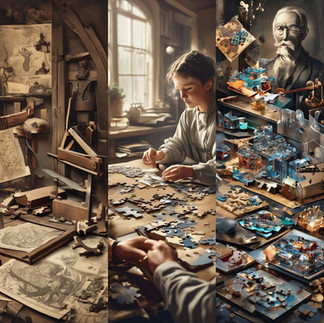


Jigsaw puzzles originated in the 18th century, initially created as educational tools rather than entertainment. The story begins with John Spilsbury, a London mapmaker and engraver, who in 1767 mounted maps on hardwood and cut them into small pieces along country borders. His goal was to help children learn geography by piecing together the map. These early puzzles were hand-cut with a fine saw, which gave rise to the term "jigsaw puzzle."

The puzzles were simple, often featuring maps or illustrations, but they sparked curiosity and engagement. Over time, the appeal of assembling images grew beyond education, turning into a pastime for adults and children alike.


Evolution of Materials and Techniques
As demand increased, the production of jigsaw puzzles evolved. By the 19th century, puzzles were no longer limited to wooden pieces. Manufacturers began using cardboard, which was cheaper and easier to mass-produce. This shift made puzzles more accessible to a wider audience.


The cutting techniques also improved. Instead of hand-cutting, machines started to punch out pieces, allowing for more intricate designs and larger quantities. The variety of images expanded from maps to landscapes, famous paintings, and whimsical scenes.





This period also saw the rise of puzzle companies, some of which still exist today. The art of puzzle-making became a blend of craftsmanship and industrial innovation.


ARTESEROSTEK and Franco Arteseros: A Modern Perspective on Puzzle Artistry
In recent years, the narrative of jigsaw puzzles has been enriched by creators like Franco Arteseros and the brand ARTESEROSTEK. They bring a fresh perspective by combining traditional craftsmanship with modern design and technology.


Franco Arteseros, a passionate puzzle artist, emphasizes the tactile and visual experience of puzzles. His work often features custom-cut pieces with unique shapes that challenge conventional puzzle assembly. ARTESEROSTEK, under his guidance, produces puzzles that are not just games but pieces of art, designed to engage the mind and the senses.

Their approach highlights how puzzles have evolved from simple educational tools to complex artworks that celebrate creativity and skill.

The Puzzle Community and Its Growing Popularity
The rise of digital entertainment might suggest a decline in traditional hobbies, but jigsaw puzzles have seen a resurgence. Communities of enthusiasts share their passion online and offline, exchanging tips, showcasing completed puzzles, and even creating puzzle art.


Brands like ARTESEROSTEK have tapped into this trend by offering limited edition puzzles and collaborations with artists like Franco Arteseros. These puzzles often feature intricate designs and high-quality materials, appealing to collectors and serious puzzlers.


The social aspect of puzzles has also grown. Puzzle cafes, clubs, and competitions bring people together, turning what was once a solitary activity into a shared experience.

Innovations Shaping the Future of Jigsaw Puzzles
Technology continues to influence puzzle design and production. Laser cutting allows for precise and creative piece shapes, while digital printing enables vibrant, detailed images. ARTESEROSTEK uses these technologies to push the boundaries of what puzzles can be.


Moreover, augmented reality (AR) and apps are starting to complement physical puzzles, offering interactive experiences that blend the tactile with the digital. Franco Arteseros envisions puzzles that tell stories, where each piece unlocks a new layer of meaning or challenge.
These innovations promise to keep puzzles relevant and exciting for future generations.

Reflecting on the Journey of Jigsaw Puzzles
Exploring the history and evolution of jigsaw puzzles through the lens of ARTESEROSTEK and Franco Arteseros reveals how this pastime has grown from simple educational tools into a sophisticated art form. The blend of tradition and innovation keeps puzzles fresh and engaging.





FRANCO ARTESEROS :::...