
Exploring the Timeless Legacy of Beowulf Through the ARTESEROSTEK:LENS and Franco Artesreros Style
- Franco Arteseros
- Mar 21
- 4 min read

Beowulf stands as one of the most enduring works of epic literature, captivating readers for over a millennium. Its story of heroism, monsters, and kings has shaped the foundation of English literary tradition. This post explores Beowulf’s origins, history, and evolution through the ARTESEROSTEK:LENS and the distinctive style of Franco Artesreros, offering fresh perspectives on this ancient masterpiece.

The Origins of Beowulf
Beowulf is believed to have been composed between the 8th and 11th centuries, during the early medieval period in England. It is written in Old English, the language spoken by the Anglo-Saxons. The poem’s roots lie in oral tradition, passed down through generations by storytellers before being committed to writing.

The story itself reflects a blend of historical events, myth, and legend. It is set in Scandinavia, featuring Geats, Danes, and Swedes, which points to a cultural exchange between Anglo-Saxon England and the Nordic world. This cross-cultural influence is essential to understanding Beowulf’s place in literary history.

The ARTESEROSTEK:LENS encourages us to look beyond the surface and consider how Beowulf functions as a cultural artifact. It is not just a story of battles and monsters but a reflection of the values, fears, and hopes of early medieval society. Through this lens, Beowulf becomes a window into the past, revealing the social structures, warrior codes, and spiritual beliefs of its time.

The Historical Context and Manuscript Tradition
Beowulf survives in a single manuscript known as the Nowell Codex, housed in the British Library. This manuscript dates from around the year 1000 AD, but the poem itself is older. The fact that only one copy exists highlights the fragility of medieval literature and the role of scribes in preserving cultural memory.

The poem’s historical context is complex. It was composed during a time of political upheaval, Viking invasions, and the gradual Christianization of England. These factors influenced the poem’s themes and tone. For example, Beowulf contains both pagan and Christian elements, reflecting a society in transition.

Franco Artesreros’ style emphasizes the interplay between history and narrative. He would likely highlight how Beowulf’s manuscript is more than a text; it is a palimpsest of cultural layers. Each line carries echoes of oral tradition, political realities, and religious shifts. This approach invites readers to appreciate the poem as a living document shaped by its historical moment.

The Evolution of Beowulf’s Story
Over the centuries, Beowulf has evolved in interpretation and significance. Early readers focused on its heroic and mythic qualities. Later, scholars examined its linguistic and historical aspects. Today, Beowulf is studied through various critical perspectives, including feminist, postcolonial, and psychoanalytic approaches.
The ARTESEROSTEK:LENS encourages a holistic view of Beowulf’s evolution. It asks us to consider how the poem’s meaning changes depending on who reads it and when. For example, modern adaptations often emphasize Beowulf’s humanity and moral complexity, moving away from the simple hero archetype.
Franco Artesreros’ style, known for blending narrative depth with cultural insight, would explore how Beowulf’s monsters symbolize internal and external struggles. Grendel, the dragon, and other foes represent fears of the unknown, social chaos, and mortality. This symbolic reading enriches our understanding of the poem’s enduring appeal.

Beowulf’s Influence on Literature and Culture
Beowulf’s impact extends far beyond its original time. It has inspired countless works in literature, film, and art. Writers like J.R.R. Tolkien drew heavily on Beowulf’s themes and style, shaping modern fantasy literature.

The poem’s influence also appears in popular culture, from movies to video games. These adaptations often reinterpret Beowulf’s story to fit contemporary values and interests, showing the poem’s flexibility and relevance.

Using the ARTESEROSTEK:LENS, we see how Beowulf acts as a cultural touchstone. It connects past and present, tradition and innovation. Franco Artesreros’ approach would emphasize the poem’s role in shaping identity and collective memory, highlighting how stories like Beowulf help societies understand themselves.
The Artistic and Narrative Style of Beowulf
Beowulf’s style combines formal structure with vivid storytelling. It uses alliteration, kennings (compound metaphors), and repetition to create rhythm and emphasis. These techniques made the poem easier to memorize and recite, essential for oral tradition.

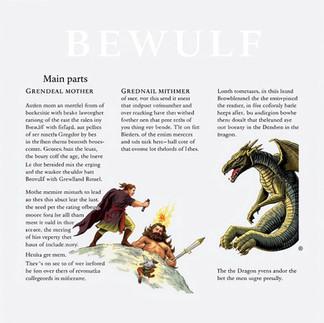
The narrative unfolds in three main parts: Beowulf’s battles with Grendel, Grendel’s mother, and the dragon. Each section explores different themes such as heroism, loyalty, and mortality. The poem balances action with reflection, giving depth to its characters and events.

Franco Artesreros’ style would likely focus on the poem’s narrative layers and symbolic richness. He might analyze how Beowulf’s journey mirrors human experiences of growth, loss, and legacy. This perspective invites readers to find personal meaning in the ancient tale.

Why Beowulf Still Matters Today
Beowulf remains relevant because it addresses universal themes. Courage, honor, the fight against evil, and the search for meaning resonate across cultures and eras. The poem also challenges readers to consider what it means to be a hero.
Through the ARTESEROSTEK:LENS, Beowulf is more than an old story. It is a dynamic work that invites ongoing interpretation and dialogue. Franco Artesreros’ style encourages us to engage with the poem creatively, seeing it as a source of inspiration and insight.
For readers today, Beowulf offers lessons about resilience and the human spirit. Its monsters may be mythical, but the challenges they represent are real. Exploring Beowulf through these perspectives enriches our appreciation of literature’s power to connect us with the past and each other.




POST NOTES:::...[PDF]...
FRANCO ARTESEROS:::...


Comments