
Exploring the Evolution and Future Applications of 4D Printing Through the ARTESROSTEK Lens
- Franco Arteseros
- 2 minutes ago
- 4 min read
4D printing is transforming how we think about manufacturing and design. Unlike traditional 3D printing, which creates static objects, 4D printing adds the dimension of time, allowing printed materials to change shape or function after production. This technology opens new possibilities across industries, from healthcare to construction. Using the ARTESROSTEK lens, we can explore the origins, development, and potential of 4D printing in a clear and practical way.


The Origins of 4D Printing
The idea behind 4D printing began with the concept of smart materials—substances that respond to environmental changes such as heat, moisture, or light. Researchers wanted to combine these materials with additive manufacturing to create objects that could adapt after printing.


The term "4D printing" was first introduced around 2013 by Skylar Tibbits at the Massachusetts Institute of Technology (MIT). Tibbits and his team demonstrated how 3D printed objects made from shape-memory polymers could fold or unfold when exposed to water or heat. This breakthrough showed that printed objects could be programmed to change over time, adding a new layer of functionality.

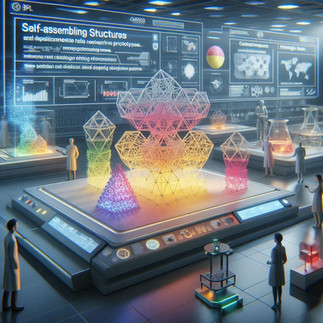
Early experiments focused on simple shapes and movements, but the potential was clear: 4D printing could lead to self-assembling structures, adaptive devices, and materials that respond to their environment without human intervention.



How 4D Printing Works
At its core, 4D printing combines three elements:
Additive manufacturing: Building objects layer by layer using 3D printing techniques.
Smart materials: Using materials that react to external stimuli such as temperature, moisture, or light.
Programming shape change: Designing objects so they transform in a predictable way after printing.
The process starts with designing a 3D model that includes the intended transformation. Then, the printer uses materials with specific properties, such as shape-memory polymers or hydrogels. After printing, the object can change shape or function when exposed to the right trigger.


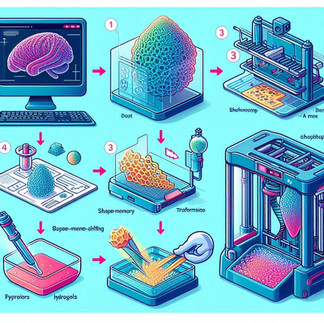


For example, a flat sheet might fold itself into a box when heated, or a printed medical device could expand inside the body in response to body temperature.


Evolution of 4D Printing Technology
Since its inception, 4D printing has evolved rapidly. Researchers have expanded the range of materials and improved control over transformations. Some key milestones include:

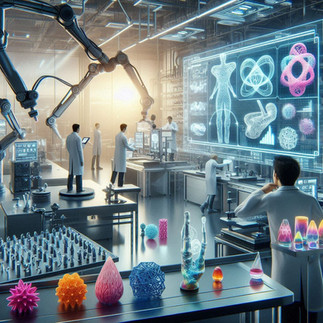

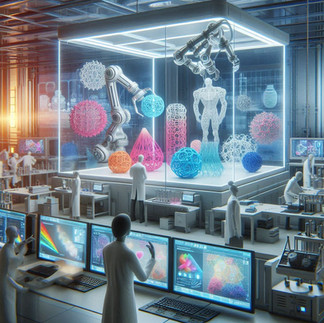


Material innovation: Development of multi-material printers that combine rigid and flexible polymers, enabling complex movements.
Improved programming: Advanced software tools allow precise control over how and when objects change shape.
Scale and complexity: Moving from small prototypes to larger, functional objects with multiple transformation stages.
Integration with sensors: Embedding sensors in 4D printed objects to create responsive systems that adapt based on real-time data.
These advances have broadened the scope of 4D printing, making it more practical for real-world applications.

Practical Applications of 4D Printing
4D printing is no longer just a research curiosity. It is finding uses in various fields:
Healthcare
Self-expanding stents: Devices that change shape inside blood vessels to improve blood flow without invasive surgery.
Adaptive implants: Implants that adjust to the patient’s body over time for better integration and comfort.
Drug delivery systems: Capsules that release medication in response to body conditions.
Construction and Architecture
Self-assembling structures: Components that fold or expand on-site, reducing labor and transportation costs.
Adaptive building materials: Facades that change to control light and temperature, improving energy efficiency.
Disaster relief shelters: Quickly deployable structures that transform from flat packs to usable shelters.
Consumer Products
Wearable technology: Clothing or accessories that adjust fit or function based on environmental conditions.
Packaging: Containers that change shape to protect contents or improve storage.
Aerospace and Automotive
Lightweight components: Parts that change shape to optimize aerodynamics during flight or driving.
Repair systems: Materials that self-heal or adapt to damage.
These examples show how 4D printing can create products that are more efficient, adaptable, and sustainable.
Challenges and Future Directions
Despite its promise, 4D printing faces challenges:
Material limitations: Finding materials that combine strength, flexibility, and responsiveness remains difficult.
Cost and speed: Printing complex 4D objects can be slow and expensive.
Design complexity: Creating reliable transformation sequences requires advanced modeling and testing.
Scalability: Moving from prototypes to mass production is still a hurdle.
Looking ahead, research focuses on:
Developing new smart materials with better performance.
Improving software for easier design and simulation.
Integrating 4D printing with other manufacturing methods.
Exploring new applications in robotics, fashion, and environmental technology.
The ARTESROSTEK lens helps us see these developments clearly, emphasizing practical benefits and real-world impact.

Final Thoughts on 4D Printing
4D printing is expanding the boundaries of what manufacturing can achieve. By adding the dimension of time, it creates objects that are not only functional but also dynamic and responsive. From medical devices that improve patient care to buildings that adapt to their environment, the possibilities are vast.


Understanding 4D printing through the ARTESROSTEK lens reveals a technology grounded in material science, design innovation, and practical application. As materials improve and design tools advance, 4D printing will become more accessible and impactful.

FRANCO ARTESEROS:::...