
Uncovering the Sopris Phase: A Deep Dive into the Ancestral Puebloan Heritage of Trinidad Colorado
- Franco Arteseros
- 21 hours ago
- 3 min read


The Sopris Phase, spanning roughly AD 1000 to 1250, represents the only known indigenous farming community successfully cultivating crops in this challenging landscape during that era. As an archaeological enthusiast and cultural historian, I find this period fascinating because it reveals how ancient peoples adapted their architecture, tools, and farming practices to a demanding environment. Let’s explore the Sopris Phase through the lens of its architecture, material culture, and broader cultural significance.

The Three Waves of Sopris Phase Evolution
Understanding the Sopris Phase means tracing its development through three distinct waves, each marked by changes in mobility, architecture, and subsistence strategies.


Initial Phase (AD 1000–1100): Mobility and Subterranean Living
The earliest Sopris Phase communities were highly mobile. They lived in subterranean pit-houses, which offered insulation against the harsh climate of the Sangre de Cristo Mountains. These pit-houses were often temporary, reflecting a lifestyle that balanced hunting with gathering wild seeds.


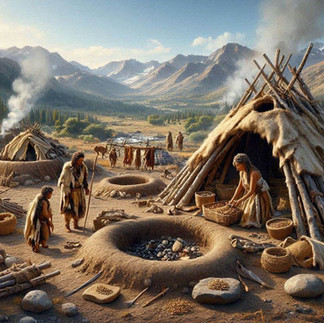


Architecture: Pit-houses dug into the earth, often circular or oval, with wooden supports covered by earth and brush.
Material Culture: Use of corner-notched projectile points for hunting and simple basin metates for grinding wild seeds.
Lifestyle: Seasonal campsites, moving to follow game and wild plant availability.
This phase shows a group still closely tied to the rhythms of the natural environment, with limited farming but a strong reliance on hunting and gathering.

Early Phase (AD 1100–1150): Transition to Farming and Adobe
By the early 12th century, Sopris Phase communities began shifting toward more permanent settlements. This period marks the introduction of basic maize farming, supplementing hunting and gathering.
Architecture: Transition from pit-houses to above-ground adobe structures, signaling a move toward permanence.
Agriculture: Early maize cultivation alongside wild plants, indicating experimentation with farming techniques.
Cultural Exchange: Appearance of Taos Black-on-white pottery, suggesting connections with neighboring Ancestral Puebloan groups.
This wave reflects a community adapting to new subsistence methods and architectural styles, blending mobility with stability.

Late Phase (AD 1150–1250): Architectural Convergence and Cultural Flourishing
The final wave of the Sopris Phase reveals a community fully settled in the Upper Purgatoire Valley, with architectural and cultural traits converging from multiple indigenous traditions.
Architecture: Larger adobe villages with multi-room structures, some showing influences from the Ancestral Puebloan style.
Material Culture: Increased presence of Taos Black-on-white pottery and other trade goods.
Agriculture: More sophisticated maize farming, supported by irrigation and soil management.
This phase highlights the Sopris Phase as a cultural crossroads, where indigenous farmers in Trinidad adapted and thrived despite the challenges posed by the region’s geography.

The Sopris Phase in the Context of the Upper Purgatoire Valley
The Upper Purgatoire River Valley’s geography shaped the Sopris Phase’s development. Nestled against the Sangre de Cristo Mountains, the valley offered a mix of arable land and wild resources. The Sopris Phase farmers were the only indigenous group east of the Continental Divide in Colorado to successfully cultivate crops during this period.
Their success depended on:
Adaptation to Environment: Using pit-houses for warmth and adobe for durability.
Agricultural Innovation: Introducing maize farming in a region with limited rainfall.
Cultural Interaction: Trading and sharing ideas with Ancestral Puebloan neighbors, as seen in pottery styles.
This combination of factors made the Sopris Phase a unique example of indigenous resilience and ingenuity.
Architectural Convergence as a Cultural Lens
One of the most intriguing aspects of the Sopris Phase is its architectural convergence. The mix of pit-houses, jacal (stick-and-mud) structures, and adobe buildings reflects a blending of traditions.
Jacal Architecture: Early stick-and-mud homes provided lightweight, temporary shelters.
Adobe Construction: Later, more permanent homes used sun-dried bricks, a technique common in Ancestral Puebloan regions.
Pit-Houses: Continued use in some areas, showing a layered approach to settlement.
This architectural diversity reveals how the Sopris Phase communities negotiated their identity and environment, borrowing and innovating to meet their needs.

The Legacy of the Sopris Phase
The Sopris Phase offers a window into a little-known chapter of indigenous history in Colorado. These farmers were pioneers, cultivating maize and building communities in a challenging landscape. Their story enriches our understanding of the Ancestral Puebloan world and the broader cultural networks of the Southwest.



For geology enthusiasts, the Sopris Phase also illustrates how human societies adapt to and shape their physical surroundings. The interplay between the Sangre de Cristo Mountains, river valley, and human ingenuity created a distinctive cultural landscape.
Exploring the Sopris Phase encourages us to look beyond surface histories and appreciate the deep connections between people, place, and time.


FRANCO ARTESEROS:::...