
The Surreal Spirit of the Mountain Men Rendezvous and Its Legacy in Modern Wilderness Culture
- Franco Arteseros
- Oct 18, 2025
- 5 min read


In the heart of the Rocky Mountains, where the air is crisp and the rivers run wild, a unique chapter of American history unfolds—a tale woven with the threads of adventure, survival, and camaraderie. The Mountain Men Rendezvous, held between 1825 and 1840, was not merely a gathering of fur traders; it was a vibrant tapestry of cultural exchange, a bacchanalian wilderness fair, and a crucible of legendary figures whose stories echo through time. This post will explore the wild legacy of the Mountain Men Rendezvous, its legendary figures, surrealist echoes, and how its spirit continues to resonate in modern wilderness culture.

The Mountain Men Rendezvous: A Cultural Confluence

The Mountain Men Rendezvous was an annual event that transformed the rugged Rockies into a bustling hub of trade and cultural exchange. Trappers, Native tribes, and merchants converged in a spectacular display of commerce and camaraderie. Picture a scene where the air is thick with the scent of campfire smoke, the sound of laughter mingles with the crackle of firewood, and the vibrant colors of trade goods create a kaleidoscope of life against the backdrop of towering peaks.

During these gatherings, the mountain men traded furs for supplies, but the Rendezvous was much more than an economic engine. It was a celebration of survival, a festival of storytelling, and a melting pot of cultures. Native American tribes shared their wisdom and traditions, while the mountain men exchanged tales of their exploits, each story more fantastical than the last. The atmosphere was electric, a mythic blend of commerce and revelry that would shape the identity of the American West.
The Rendezvous was a place where the boundaries of reality blurred, and the surreal became commonplace. Imagine a medieval Andorran fair, where the spirit of the mountains infused every interaction, and the laughter of traders echoed like a distant melody. The mountain men, with their wild beards and weathered faces, became avatars of a new frontier, embodying the resilience and spirit of exploration that defined an era.
Legendary Figures of the Frontier
Among the throngs of traders and trappers, a few legendary figures emerged, each with a story that could fill volumes.
Jim Bridger: The Storyteller and Survivalist

Jim Bridger was not just a mountain man; he was a master storyteller, a survivalist who could navigate the most treacherous terrains. His tales of adventure captivated audiences, blending fact and folklore into a rich narrative tapestry. Bridger's ability to adapt to the wilderness made him a key figure in the Rendezvous, where his stories became the lifeblood of the gathering.
Kit Carson: The Scout and Expansionist

Kit Carson, another towering figure of the frontier, was a scout whose exploits helped shape the westward expansion of the United States. His keen sense of direction and unparalleled survival skills made him a legend among mountain men. Carson's life was a cinematic arc of bravery and exploration, embodying the spirit of the Rendezvous as he forged paths through uncharted territories.
John Colter: The Proto-Surrealist Explorer
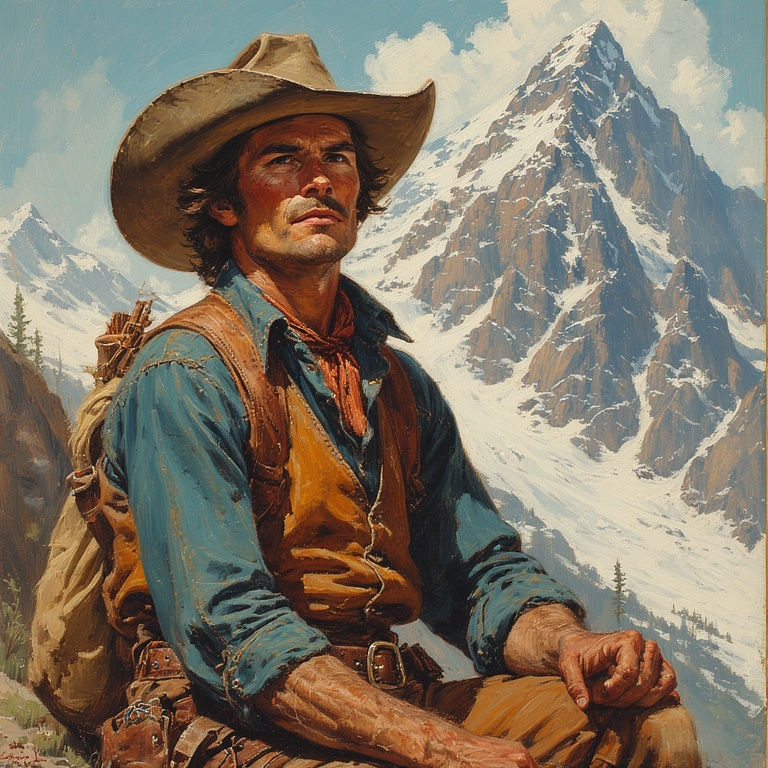
John Colter's adventures were nothing short of surreal. As one of the first white men to explore Yellowstone, he encountered geysers, hot springs, and wildlife that seemed to leap from the pages of a fantastical tale. Colter's experiences blurred the lines between reality and imagination, making him a proto-surrealist explorer whose legacy continues to inspire.
Jim Beckwourth: The Trailblazer with a Flair for Reinvention

Jim Beckwourth was a trailblazer in every sense of the word. As an African American mountain man, he defied the odds and carved out a place for himself in a world that often marginalized him. His life was a testament to resilience and reinvention, as he navigated the complexities of race and identity in the wilderness.
Jedediah Smith, Joe Meek, and Tom Fitzpatrick: Cinematic Arcs Worth Dramatizing
Jedediah Smith, Joe Meek, and Tom Fitzpatrick each had their own cinematic arcs, filled with adventure, danger, and triumph. Smith's relentless pursuit of exploration, Meek's daring escapades, and Fitzpatrick's role as a bridge between cultures all contributed to the rich tapestry of the Rendezvous. Their stories are not just historical footnotes; they are the stuff of legends, waiting to be retold.
Surrealist Echoes & Symbolism
The Mountain Men Rendezvous can be likened to a Talavera-tiled dreamscape, where vibrant colors and intricate patterns symbolize the diverse cultures that converged in the Rockies. The botanical motifs of the wilderness, such as the Canna plant, serve as powerful symbols of trade, transformation, and adaptation. Just as the Canna thrives in various environments, so too did the mountain men adapt to the challenges of their surroundings.
In this surreal landscape, the mountain men emerge as avatars of ESP—exploration, survival, and perseverance. They embody the spirit of the dirt-bike mythos, racing through the wilderness with a sense of freedom and adventure that resonates with modern outdoor culture. Imagine a 21st-century Rendezvous powered by AI, GANs, and folklore, where the stories of the past intertwine with the innovations of the future.

Modern Resonance: The Spirit of the Rendezvous Today
The spirit of the Mountain Men Rendezvous lives on in Colorado's outdoor culture, where the echoes of the past resonate in the hearts of adventurers and nature enthusiasts. Today, the wilderness is a canvas for exploration, creativity, and resilience, much like it was for the mountain men of yore.
Outdoor festivals, trade shows, and gatherings celebrate the legacy of the Rendezvous, inviting modern-day explorers to connect with the land and each other. The ethos of survivalism, self-reliance, and community remains strong, echoing the values that defined the mountain men.
As we navigate the complexities of the 21st century, we can draw parallels between the microstate resilience of Andorra and the creative survivalism of the modern wilderness culture. Just as the mountain men adapted to their environment, so too do we find ways to thrive in an ever-changing world.
Conclusion: Share Your Own Frontier Myths
The Mountain Men Rendezvous was more than a historical event; it was a celebration of the human spirit, a testament to resilience, and a vibrant tapestry of stories that continue to inspire. As we reflect on the wild legacy of the mountain men, we invite you to share your own frontier myths. What stories of adventure, survival, and camaraderie resonate with you?
Let us honor the spirit of the Rendezvous by keeping the tales of the past alive, weaving them into the fabric of our modern wilderness culture. Together, we can create a new narrative that celebrates exploration, creativity, and the enduring connection between humanity and the wild.

Franco Arteseros...


Comments