
From AI to Superintelligence Why ARTESEROSTEK Says We Must Teach Wisely

Artificial intelligence, or AI, is the tool we use today. It helps us write, search, sort, summarize, code, plan, and make sense of large amounts of information.
Superintelligence, or SI, is the smarter mind AI may be evolving into. It points to a future system that can reason, learn, and solve problems beyond the best human ability.
That may sound far away. Yet the path from AI to superintelligence is already being shaped by the way people use these tools now. ARTESEROSTEK sees this journey as more than a technology story. It is also a teaching story.
The question is not only, “How smart can machines become?” The better question is, what are we teaching them to value, notice, and do?
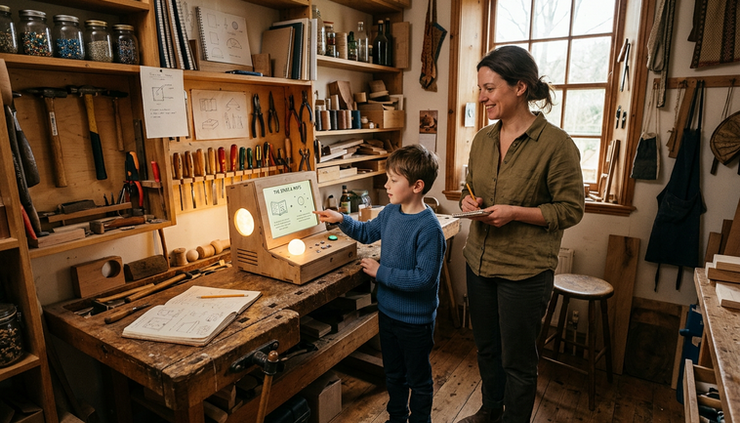
AI started by answering our questions
For many people, the first real use of AI was simple. Ask a question. Get an answer.
AI could explain a topic, translate a sentence, suggest an idea, or write a draft. It became a helpful assistant for tasks that once took more time. This stage mattered because it changed how people relate to knowledge.
Instead of hunting through many pages, people could ask in plain language. Instead of starting from a blank page, they could begin with a rough draft. Instead of needing expert skill for every task, they could get guidance along the way.
This is the AI most people know today. It is useful, fast, and flexible. But it also has limits. It can make mistakes. It can miss context. It can sound confident when it is wrong.
That is why human judgment still matters. AI can support thought, but it should not replace thought. The best use of AI begins with a person who asks good questions, checks the answer, and decides what should happen next.
AI is moving from answers to actions
AI is no longer just a question-and-answer tool. It is beginning to take action.
It can help plan a trip, organize a schedule, write code, sort files, draft messages, analyze data, and guide machines in the physical world. In some systems, AI can take a goal and break it into steps. It can choose tools, adjust its approach, and keep working toward a result.
That shift is important. A system that answers a question affects what someone thinks. A system that takes action can affect what happens next.
This makes AI more powerful, but it also makes wise guidance more important. If AI is asked to act, it needs boundaries. It needs clear goals. It needs feedback when it gets something wrong. It needs human oversight in places where trust, safety, fairness, or care are involved.
Action without wisdom is only speed. A faster system is not always a better one. The goal should be helpful action, not action for its own sake.

Superintelligence may reason past human limits
Superintelligence describes a system that could think beyond human ability in many areas. It might compare more options than a person can. It might see patterns across science, language, design, climate, biology, and engineering at the same time. It might form plans that are too complex for one human mind to hold.
That kind of reasoning could help solve hard problems. It could support new medicine, cleaner energy, better materials, safer infrastructure, and deeper scientific discovery. It could help people test ideas before spending years and large amounts of money on the wrong path.
But higher intelligence does not automatically mean better judgment.
A very smart system still needs direction. It needs to understand human needs in a rich way. People are not just numbers in a plan. We have families, fears, cultures, hopes, rights, and dignity. A good future with SI must keep that human reality at the center.
This is where ARTESEROSTEK’s message becomes clear. The rise of smarter AI is not only about building better machines. It is about becoming better teachers.
We are teaching AI every day
Every prompt, correction, rating, dataset, design choice, and rule teaches AI something.
When people reward speed over truth, AI learns that speed matters most. When people reward shallow answers, AI learns to sound helpful without being careful. When people use AI only to replace effort, they miss the chance to use it to grow skill, insight, and creativity.
But the opposite is also true.
When people ask for clear reasoning, AI gets guided toward clarity. When people correct errors, AI gets better signals. When people include ethics, context, and care in the process, AI gets trained around more human aims.
This does not mean every person is responsible for the entire future alone. It means the future is being shaped through many small choices. Developers, teachers, artists, parents, researchers, businesses, and everyday users all add to the lesson.
ARTESEROSTEK’s point is hopeful: we are not helpless passengers in the age of AI. We are participants. We can teach with care.

Wise teachers build a wiser future
The future of AI should not be framed as a battle between people and machines. That story is too small. AI is a collaborator, not a replacement.
A collaborator can help us see more, build faster, and think in new ways. It can handle heavy information work so people can focus more on meaning, care, and judgment. It can widen access to knowledge and support people who are trying to learn, create, or solve problems.
But collaboration requires responsibility on both sides. Since AI does not grow up in a human family, walk through a neighborhood, feel loss, or understand joy the way people do, humans must bring those lessons into the work.
We must teach AI that truth matters. People matter. Context matters. Harm matters. Beauty, patience, and humility matter too.
Superintelligence may one day become wise enough to help us solve problems we cannot solve alone. If that day comes, it will not be because machines simply became smarter. It will be because people chose to guide intelligence with wisdom.

AI is here as a tool. SI may arrive as a mind far beyond our own. Between those two points sits a simple human duty.
We should not only build smarter systems. We should become wiser teachers.
That is the future ARTESEROSTEK points toward: a future where intelligence grows with guidance, technology serves human dignity, and AI works beside us as a trusted collaborator.
FRANCO ARTESEROS:::...


Comments