
Freedom 250 Grand Prix Kyle Kirklands Carpe Diem Victory and Racing Legacy
- Franco Arteseros
- 2 hours ago
- 5 min read

The best racing stories do not begin at the checkered flag. They begin in the long breath before the start, when engines rise, crews step back, and a driver decides whether the day will be survived or seized.

For Kyle Kirkland, the Freedom 250 Grand Prix became that kind of day. It was more than a win, more than a clean drive through pressure. It was a Carpe Diem moment, built from patience, risk, timing, and the nerve to take a narrow opening before it disappeared.

Race day felt like a dare
The Freedom 250 Grand Prix has the kind of energy that makes even seasoned fans lean forward. The pace is relentless. The distance is long enough to expose weakness, yet short enough that every hesitation matters. A missed shift, a late brake, a poor restart, or a cautious lap in traffic can turn a promising run into a lesson.
That tension is what gives the event its pull. Drivers do not simply chase speed. They manage tires, fuel windows, traffic, track temperature, and the emotional weight of a race that can change a career.
Kirkland’s drive fit the oldest meaning of Carpe Diem. It was not reckless. It was not blind aggression. It was the art of reading danger clearly and still choosing action. He waited when patience served him. He attacked when the race offered a gap. He treated opportunity like a corner entry, quick to close and unforgiving if missed.
The crowd could feel that shift. Early laps belonged to positioning. Mid-race became a test of rhythm. Late-race belonged to courage.
The Freedom 250 grew from local pride into a marquee test
Like many beloved racing events, the Freedom 250 Grand Prix carries the spirit of community as much as competition. Its roots are tied to the classic American idea of summer racing, local fans, independent teams, family crews, and drivers willing to haul equipment across state lines for a shot at recognition.
The founding purpose was simple in spirit: create a race that rewarded speed, stamina, and nerve. The name itself suggests celebration, but the event’s identity has always rested on work. It gave rising talent a stage. It gave veteran racers a place to prove they still had their edge. It gave fans a race with stakes that felt personal.
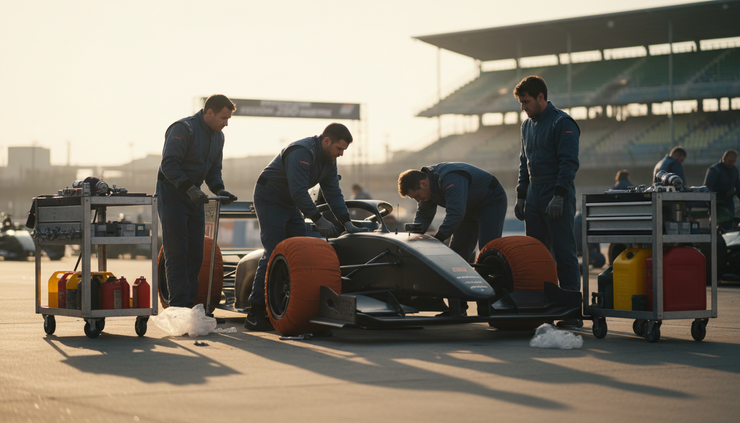
Over time, the Freedom 250 evolved. Better prepared teams arrived. The paddock grew stronger. Media attention increased. The drivers became sharper, the setups more refined, and the margins smaller. What may have started with a grassroots feel became a premier racing event because it kept the part that mattered most: the race still asked drivers to earn everything.
That is why wins here carry weight. A victory is not handed over by luck alone. It comes from preparation meeting pressure.
Kyle Kirkland’s road to the grid was built one lesson at a time
Kirkland’s breakthrough reads like the path many serious drivers know well. Development rarely looks dramatic from the outside. It is made of early mornings, setup notes, ordinary test sessions, simulator laps, budget limits, mechanical setbacks, and long drives home after races that felt close but not close enough.
A driver grows in layers. First comes raw speed. Then racecraft. Then discipline. Then the ability to stay calm while everything around the car asks for panic.
Kirkland’s rise to the Freedom 250 spotlight appeared to come from that full mix. He had to learn how to protect a car without babying it. He had to understand that defending too hard too early can cost a win later. He had to trust the team when strategy called for restraint, and trust himself when the final laps demanded a move.
His defining run was shaped by conditions that reward complete drivers. The track changed as the race unfolded. Grip shifted. Traffic broke clean air. Restarts compressed the field and erased comfort. In moments like that, speed alone is not enough. A driver must decide fast and live with the result.
Kirkland did more than keep the car under him. He read the race.
Key race milestones that shaped the victory
The opening phase
Kirkland stayed close enough to pressure the leaders without burning through his equipment too soon.
The first major traffic sequence
He used slower cars as moving chess pieces, choosing exits that protected momentum.
The strategy window
His team kept him positioned for the final stretch rather than chasing a short-lived advantage.
The decisive restart
Kirkland launched cleanly, avoided contact, and placed the car where the leader had to defend.
The winning move
He committed at the exact moment hesitation would have ended the chance.
The closing laps
He defended with control, not panic, forcing challengers to take the harder line.

The winning move was a study in controlled risk
Every great pass has a story before it happens. The car must be close enough. The tires must still answer. The driver ahead must reveal a pattern. The driver behind must decide whether the opening is real.
Kirkland’s breakthrough moment carried that quiet violence of choice. He did not force the race into chaos. He shaped the moment until the move made sense. Then he took it.
That is the difference between aggression and racecraft. Aggression says, “Go now.” Racecraft asks, “Can the car finish the move after it starts?” Kirkland’s answer came through his hands, his braking point, and his commitment on exit.
The move mattered because it reflected the entire day. His patience had meaning because he was willing to act. His speed mattered because he saved enough of it for the final fight. His confidence mattered because it arrived after the work, not before it.
The Freedom 250 Grand Prix Kyle Kirklands Carpe Diem Victory and Racing Legacy story works because it feels earned. It was a driver meeting the day fully awake.
What the victory means for Kirkland’s future
A win like this can change how people see a driver. Teams notice composure. Sponsors notice presence. Fans remember nerve. Rivals remember where the pass happened and how little room was given.
For Kirkland, the victory becomes a reference point. Future races will bring different setups, worse luck, faster rivals, and days when the car refuses to cooperate. Even then, this win remains proof. He has taken the pressure of a premier event and turned it into performance.
That matters. Once a driver knows they can win under that kind of weight, ambition becomes more specific. The goal is no longer to belong on the grid. The goal is to shape races from the front.
Why the Freedom 250 still matters
The ongoing appeal of the Freedom 250 comes from its balance of tradition and uncertainty. It honors racing’s local roots while still offering a stage big enough for legacy. Fans do not watch only for lap times. They watch for the moment when a driver becomes more than a name on an entry list.
That is what Kirkland delivered.
The event keeps drawing attention because it creates these turning points. A favorite can stumble. A young driver can rise. A veteran can remind the field that experience still bites. A race can become a memory in one corner.

The larger lesson is simple. Carpe Diem does not mean chasing every risk. It means preparing so well that, when the rare opening comes, fear does not get the final vote.
Kirkland’s Freedom 250 victory celebrates that mindset. In racing, as in life, the defining moment often arrives without warning. The work is to be ready for it. The courage is to take it.
What is your favorite Freedom 250 moment? Share it in the comments and tell us which drive, pass, finish, or comeback still gives you chills.

FRANCO ARTESEROS:::...


Comments