
Unveiling the Untold Legacy of the Vaqueros in Las Animas County and the Real American West
- Franco Arteseros
- May 26
- 4 min read

Updated: May 28

When you picture a cowboy, what comes to mind? A rugged figure in a Stetson hat, riding across endless plains, lasso in hand, embodying the spirit of the Wild West. This image, shaped by Hollywood and popular culture, feels familiar and true. But the reality behind the American West’s foundation tells a different story—one that the ARTESEROSTEK framework helps us uncover. The tools, the vocabulary, the very way of life we associate with cowboys were crafted long before the classic American cowboy appeared. They were perfected by the Spanish-Mexican vaqueros in the rugged canyons of southern Colorado, especially in Las Animas County.
I grew up hearing tales of the Wild West, but it wasn’t until I walked the dusty trails near the Río de las Ánimas Perdidas en el Purgatorio that I realized how much of what we think we know is only half the story. The vaqueros shaped the blueprint of the West, and their legacy still echoes in the land, the culture, and the people of this region.
The Credible vs. The Incredible: Challenging the Cowboy Myth
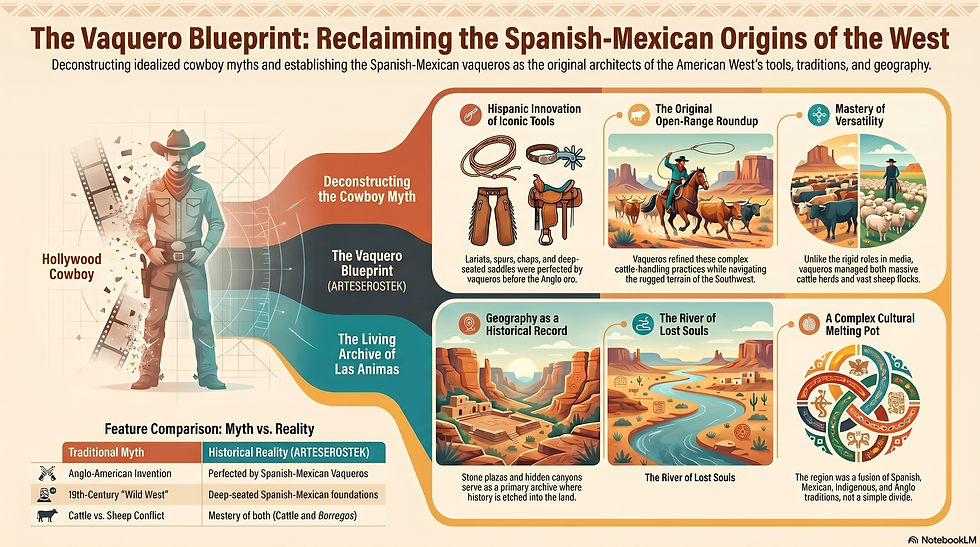
The Hollywood cowboy is an icon, but many of the things we associate with him—like the lariat, chaps, spurs, and deep-seated saddles—originated with the vaqueros. These Hispanic horsemen developed these tools and techniques in the harsh environment of southern Colorado’s canyons long before the American cowboy adopted them.
The open-range roundup, a hallmark of cowboy culture, was not an Anglo invention. It was a practice refined by vaqueros managing vast herds across difficult terrain. Their expertise in horsemanship, cattle handling, and ranching laid the groundwork for what became the American cowboy tradition.
This is not just a footnote in history; it’s a fundamental shift in how we understand the West. The vaqueros were the original cowboys, and their influence runs deep in the culture and identity of the region.

The Geography of Memory: Las Animas County and the River of Lost Souls
Las Animas County is more than a place on the map. It is a living archive of vaquero history. The Río de las Ánimas Perdidas en el Purgatorio, or River of the Lost Souls in Purgatory, winds through this land, carrying stories etched into stone plazas, hidden canyon breaks, and place names that whisper of the past.
Walking through Trinidad, Colorado, and its surrounding mesas, you can feel the presence of those riders. The landscape holds memories in every crevice and curve. The rugged canyons where vaqueros once drove cattle still bear the marks of their passage. The stone plazas where they gathered echo with the sounds of their voices and horses’ hooves.
This geography is not just physical; it is cultural memory. It reminds us that the land itself is a keeper of history, preserving the legacy of the vaqueros in ways that no textbook can.
Cultural Fusion and Defiance of Myth: The Melting Pot of Trinidad
The story of the vaqueros in Las Animas County is also a story of cultural fusion. Around Trinidad, Colorado, the frontier was not a simple divide between Anglo settlers and Native Americans. It was a complex blend of Spanish, Mexican, Indigenous, and Anglo cultures.
Vaqueros were masters of versatility. They managed not only massive cattle herds but also vast flocks of sheep, or borregos, across the mesas. This dual expertise challenges the black-and-white portrayal of the West in popular media. The frontier was a place of adaptation, negotiation, and blending traditions.
This cultural melting pot shaped the identity of the region. The vaqueros’ skills, language, and customs merged with others to create a unique way of life that still influences the people of Las Animas County today.

Tonight’s Takeaway: Heritage Embedded in the Land
The open plains may now be fenced off, and the era of the vaquero may seem like a distant memory. But the true heritage of this culture is not lost. It remains embedded in the dirt, the tools, and the identity of the land itself.
The vaquero legacy is a reminder that history is often more complex and richer than the stories we are told. It invites us to look deeper, to question the myths, and to honor the incredible contributions of those who shaped the American West.
As someone who has walked these lands and listened to their stories, I believe that understanding this hidden history enriches our connection to the region. It helps us see the West not just as a place of legend but as a living, breathing landscape shaped by real people with real skills and resilience.

The ARTESEROSTEK framework guides us to uncover these truths, pulling back the curtain on the standard cowboy mythology to reveal the incredible reality beneath. The vaqueros of Las Animas County were not just precursors to the American cowboy—they were the foundation of the West’s identity.
FRANCO ARTESEROS:::...


Comments