
The Phantom of Goya: Decapitated Genius and the Echoes of Vision in ARTESEROSTEK Archives
- Franco Arteseros
- 14 hours ago
- 3 min read


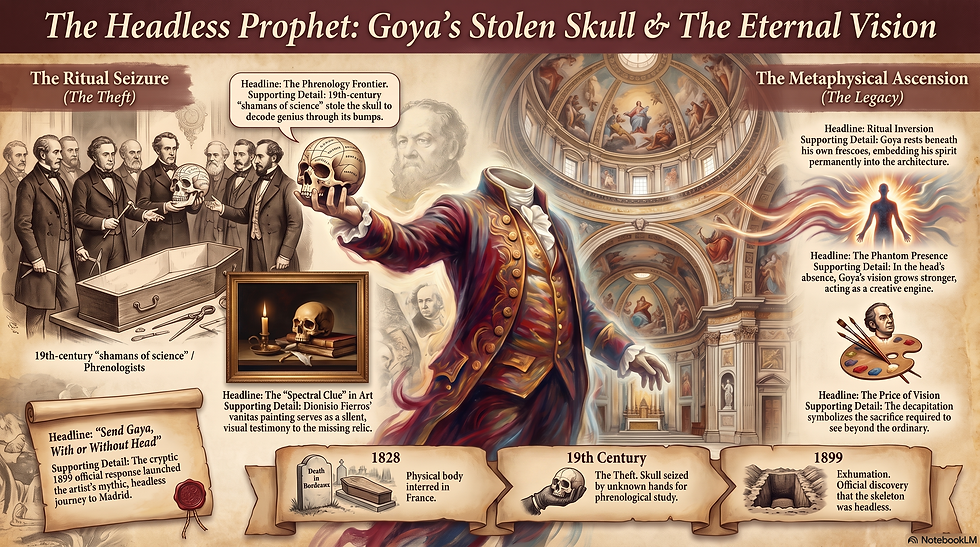
Francisco Goya, the maestro whose brush captured the shadows of human nature, died far from his homeland in Bordeaux, 1828. Nearly seven decades later, in 1899, his remains were exhumed, but the skull was missing. The telegram sent to the authorities read: “Goya skeleton without a head. Please instruct me.” The terse reply came back: “Send Goya, with or without head.” This cryptic exchange marks the beginning of a mythic journey, a story that the ARTESEROSTEK archive holds as a metaphysical anchor for understanding genius, loss, and vision.

Phrenology Frontier
In the 19th century, the science of phrenology sought to map genius onto the contours of the skull. The head was not just bone but a frontier where science met superstition. Goya’s missing skull, taken by unknown hands, was likely a relic for those who believed that the secrets of his dark, visionary mind could be unlocked by measuring bumps and hollows.
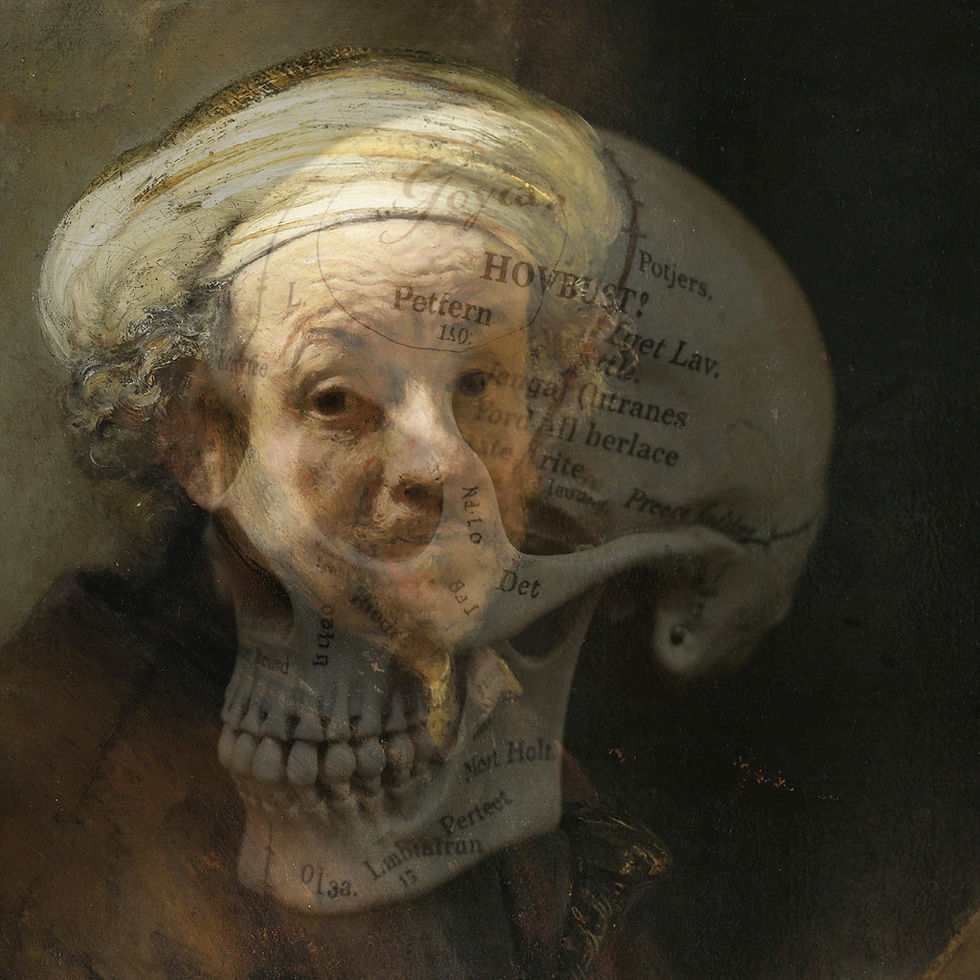
This act was a ritual, a crossing of boundaries between respect and violation. The phrenologists, like shamans of a new age, hunted for the physical imprint of genius. They believed the cráneo held the key to understanding the mind that painted Los Caprichos and The Black Paintings. The theft was not mere theft but a symbolic seizure of power, a frontier rite where science tried to possess the intangible.
Dionisio Fierros Clue
In the archives, a vanitas painting by Dionisio Fierros emerges as a spectral clue. It depicts a skull labeled “Cráneo de Goya”, resting among symbols of mortality and artistic creation. This painting is more than a still life; it is a mythic relic wandering through the studios of memory and history.
The skull in Fierros’ work is a ghostly witness, a silent testimony to the missing head. It haunts the spaces where artists and archivists meet, a reminder that genius can be fragmented, stolen, yet still present. This vanitas becomes a bridge between the physical absence and the metaphysical presence of Goya’s vision.

Reburial in Madrid
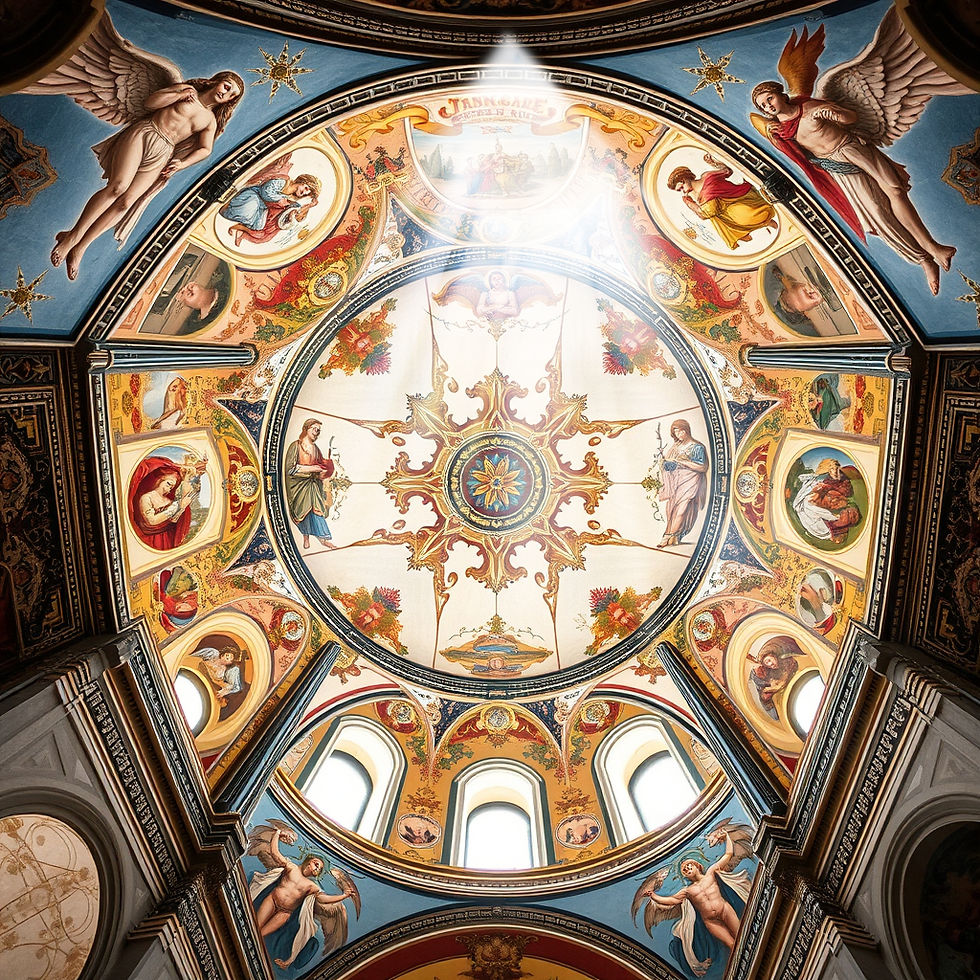
Goya’s body rests headless beneath the frescoes he painted in San Antonio de la Florida, Madrid. This burial is a ritual inversion: the visionary lies under his own painted sky, his head lost but his spirit embedded in the walls.
This site becomes a metaphysical crossroads. The Maestro Decapitado is both present and absent, his body a vessel for the vision that transcends physical form. The frescoes above him are not just decoration but a celestial canopy, a painted cosmos that shelters a headless prophet.
Mythic Anchor
Within the ARTESEROSTEK archive, Goya’s missing head transforms into a symbol rich with meaning:
Price of vision: The loss of the skull marks the cost of seeing beyond the ordinary, a sacrifice at the altar of creativity.
Frontier relic: The stolen cráneo is a relic of genius taken by those who sought to own it, a reminder of the fragile boundary between reverence and violation.
Portal of modernity: Goya’s decapitation signals the entry of modernity into Spain, a rupture that opened new ways of seeing and being.
Fragile archives: The missing head warns that archives are vulnerable, that history can be incomplete, stolen, or rewritten.
Creative engine: Even without his head, Goya continues to see through us, his vision alive in the fractures and silences.
The ARTESEROSTEK team, led by Franco Arteseros and the VCF collective, has worked to canonize this mythic absence. They treat the missing skull not as a loss but as a metaphysical anchor, a point where history, myth, and creativity converge.
Closing Invocation
What happens when the head of the visionary disappears but the vision remains? How does a nation carry a prophet who returns headless? How does the archive transform wounds into portals?
These questions echo through the ARTESEROSTEK archive, inviting us to reflect on the nature of genius, loss, and memory. Goya’s missing skull is not just a historical curiosity but a living symbol, a portal through which we glimpse the fragile, powerful, and enduring spirit of creativity.
In the absence of the head, the vision grows stronger, a phantom presence guiding us across the frontier of history and myth.

FRANCO ARTESEROS:::...


Comments