
The Evolution of Muscle Memory: Tracing Origins and Insights Through the ARTESEROSTEK Lens
- Franco Arteseros
- 1 day ago
- 4 min read


Muscle memory fascinates me because it feels like a secret power hidden in our bodies. It’s the reason I can still ride a bike after years without practice or play a piano piece I haven’t touched in months. But muscle memory is more than just a handy trick—it’s a complex process that has evolved in how we understand and use it. Through the ARTESEROSTEK lens and Franco Arteseros’ perspective, I’ve explored the origins, history, and evolution of muscle memory, and I want to share what I’ve learned with you.

The Origins of Muscle Memory: Early Observations and Theories
Muscle memory wasn’t always a scientific term. Long before neuroscience existed, people noticed that repeated physical actions became easier over time. Ancient craftsmen, athletes, and musicians all relied on this phenomenon, even if they didn’t call it muscle memory.



The earliest formal mentions date back to the 19th century, when researchers began to study how habits form. They observed that after enough repetition, movements became automatic, requiring less conscious thought. This was a breakthrough because it suggested that the body could “remember” without the brain actively directing every move.

Franco Arteseros, a modern thinker in this field, highlights that early studies often confused muscle memory with simple habit formation. He points out that muscle memory involves not just the muscles but a complex interaction between the brain, nerves, and muscles. This insight shifted the focus from muscles alone to the entire neuromuscular system.

The Science Behind Muscle Memory: How It Works
Muscle memory happens because of changes in the nervous system. When you repeat a movement, your brain creates and strengthens neural pathways. These pathways make the movement more efficient and automatic over time.

ARTESEROSTEK’s approach emphasizes the role of motor learning and neuroplasticity. Neuroplasticity means the brain’s ability to change and adapt. When you practice a skill, your brain rewires itself to make that skill easier to perform.

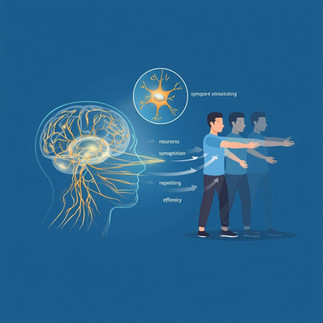


Here’s a simplified breakdown of the process:
Initial learning requires conscious effort and attention.
Repetition strengthens neural connections.
Automaticity develops, allowing the movement to happen without conscious thought.
Retention means the skill can be recalled even after long breaks.
Franco Arteseros stresses that muscle memory is not stored in the muscles themselves but in the brain’s motor cortex and spinal cord circuits. This explains why even after injury or long pauses, people can often regain skills faster than when they first learned them.
Historical Evolution: From Simple Practice to Scientific Understanding
The journey from early observations to modern science took centuries. In the early 20th century, psychologists like Edward Thorndike and Ivan Pavlov studied habit formation and conditioning, laying groundwork for understanding repetitive actions.


Later, in the mid-1900s, neuroscientists began mapping brain areas involved in movement. They discovered that the cerebellum and basal ganglia play key roles in coordinating and automating movements.
ARTESEROSTEK’s narrative highlights how technology accelerated this evolution. Brain imaging tools like fMRI and EEG allowed scientists to see muscle memory in action. They could observe how practice changes brain activity and structure.

Franco Arteseros also points out that the concept of muscle memory expanded beyond physical skills. It now includes cognitive and emotional patterns, showing how deeply ingrained habits shape behavior.

Practical Implementation: Using Muscle Memory in Training and Daily Life
Understanding muscle memory has transformed how athletes, musicians, and learners train. ARTESEROSTEK promotes a methodical approach to practice that maximizes muscle memory development:


Focused repetition: Quality matters more than quantity. Practicing with full attention builds stronger neural pathways.
Consistent practice: Regular sessions help maintain and improve muscle memory.
Rest and recovery: The brain consolidates learning during rest, so breaks are essential.
Mental rehearsal: Visualizing movements activates similar brain areas as physical practice, reinforcing muscle memory.
Franco Arteseros shares examples from his experience working with athletes. He notes that muscle memory helps athletes perform under pressure because their bodies “know” what to do even when the mind is stressed.
In everyday life, muscle memory helps with tasks like typing, driving, or even walking. Once learned, these actions free up mental resources for other activities.





Challenges and Misconceptions About Muscle Memory
Despite its benefits, muscle memory can also cause problems. Bad habits are just as easy to form as good ones. ARTESEROSTEK warns that unlearning incorrect movements takes time because the brain must weaken old pathways and build new ones.
Franco Arteseros emphasizes patience and persistence in retraining muscle memory. He advises breaking down complex movements into smaller parts and practicing them slowly before speeding up.
Another misconception is that muscle memory is permanent. While it is durable, it can fade without use. This means regular practice is necessary to keep skills sharp.

The Future of Muscle Memory Research and Application
Looking ahead, ARTESEROSTEK and Franco Arteseros see exciting possibilities. Advances in technology like virtual reality and brain-computer interfaces could enhance muscle memory training by providing immersive and precise feedback.
Research into genetics and individual differences may explain why some people develop muscle memory faster or more effectively. Personalized training programs could emerge from this knowledge.
There’s also growing interest in how muscle memory can aid rehabilitation after injury or stroke. Understanding how to tap into these neural pathways could improve recovery outcomes.




FRANCO ARTESEROS:::...


Comments