
Madrid Turns Red and Gold Spain World Cup Victory Parade at Cibeles
- Franco Arteseros
- 3 days ago
- 8 min read

Madrid did not sleep after Spain won the World Cup. It roared.
The final had stretched nerves to the breaking point. Every pass felt heavy. Every clearance sounded like a warning. Spain, the team that had built its identity on patience, touch, and nerve, pushed through a match that seemed determined to deny beauty its reward. Then came the moment that turned tension into history: Andrés Iniesta’s late goal, the strike that made Spain world champions for the first time.
Across Madrid, silence split open. Apartments shook. Bars erupted. Strangers hugged in doorways. Car horns took over the night. The red and gold of the Spanish flag poured into the streets as if the city itself had been waiting years to exhale.
This was more than a football celebration. It was a national release, a historic public party, and one of the great street scenes in modern sports memory.
If the scale of that night needed three alternate headlines, they could be:
When Madrid Became Spain’s Red and Gold Heartbeat
Cibeles Erupted as Spain Brought the World Cup Home
Nearly Two Million Voices Sang Spain Into Football History

Madrid held its breath before the party exploded
World Cup finals have a strange power. They make cities feel suspended in time. On that night, Madrid moved between hope and fear with every touch of the ball. Bars were packed shoulder to shoulder. Plazas filled early. Families gathered around televisions at home with windows open, listening to neighbors react a second before or after their own screen.
The stakes were enormous. Spain had won the European Championship in 2008, but the World Cup still stood apart. It was the missing crown, the one that had escaped generations of gifted Spanish players. The national team had often carried the weight of expectation and the sting of disappointment. This time, the belief felt different.
When the winning goal arrived, Madrid did not celebrate in stages. It detonated.
People rushed into the streets from homes, restaurants, cafés, and corner bars. Flags appeared from balconies. Scarves spun above heads. The chant of “¡España! ¡España!” bounced between buildings. The capital became a living echo chamber, and every neighborhood added its own volume.
The final whistle confirmed what the goal had promised. Spain were world champions. The phrase sounded almost unreal at first. Then it became the only thing anyone wanted to say.
Gran Vía and Puerta del Sol became a sea of red and gold
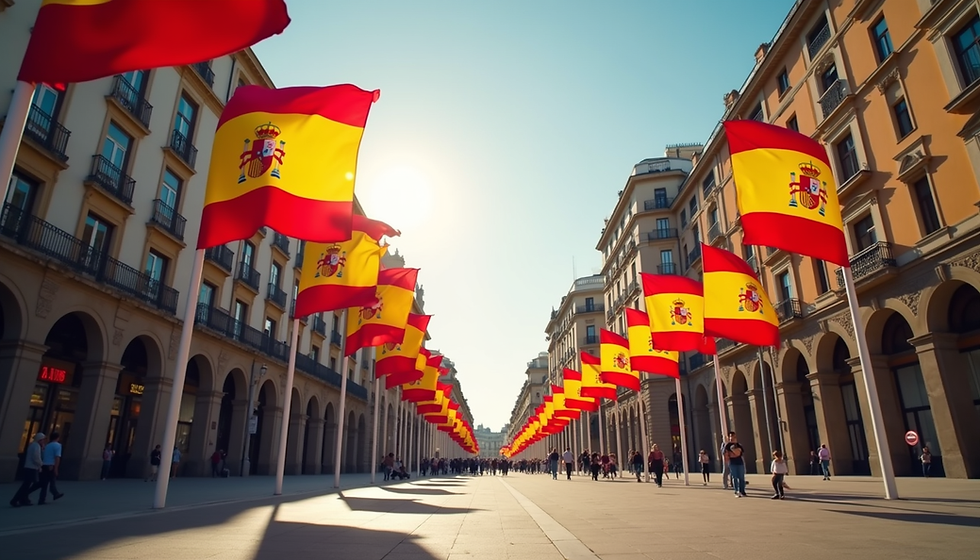
Central Madrid turned into the emotional center of the country. From Gran Vía to Puerta del Sol, people filled the streets in waves. The city’s great avenues, usually home to taxis, buses, shoppers, and theater crowds, became an enormous open-air celebration.
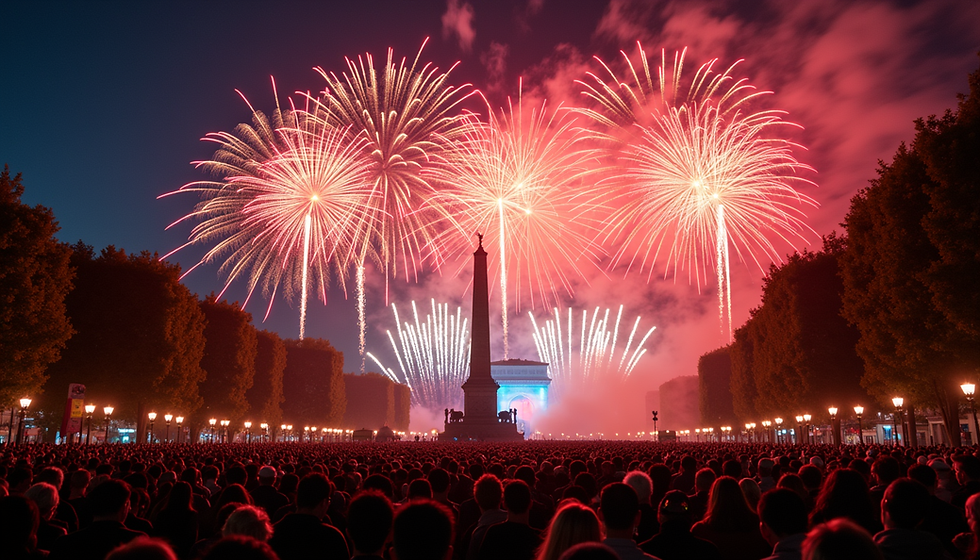
Estimates put the crowds at close to two million fans, an astonishing human tide dressed in Spain’s colors. Red shirts, yellow scarves, face paint, flags, drums, plastic horns, and handmade signs filled every sightline. The sound rose from every direction at once.
Gran Vía, with its grand facades and bright signs, became a stage without a script. Fans climbed onto shoulders to see above the crowd. Friends locked arms and bounced in rhythm. Children sat high on parents’ backs, waving flags they could barely hold. Older fans watched with wet eyes, aware that they were seeing something Spanish football had never given them before.
Puerta del Sol carried its own symbolism. The square has long been one of Madrid’s great meeting points, a place where the city gathers for New Year’s Eve, protests, festivals, and moments that feel bigger than daily life. After the World Cup win, Sol felt like the center of a country singing in one voice.
The celebration had the loose energy of a street festival, but the emotion was sharper. Every chant had history behind it. Every flag seemed to carry years of waiting.
Common chants rolled through the crowd:
“Yo soy español, español, español”
“Campeones, campeones”
“Iniesta, Iniesta”
“Villa, Villa”
The songs did not always stay in tune. That hardly mattered. The street had become a choir, and football had given it the lyrics.

The champions’ parade carried the trophy through Madrid
The day after the final, the celebration became a procession. Spain’s players returned home not as contenders, but as champions. The open-top bus carried them through the capital, surrounded by a moving wall of fans.
The parade gave Madrid a chance to see the team up close. It also gave the players a chance to feel the weight of what they had done. From the bus, they waved, laughed, sang, filmed the crowd, and lifted the trophy for the thousands lining the route. The World Cup glittered above the players’ heads, small in size compared with the emotion around it, but massive in meaning.
This was the public face of the Spain World Cup Victory Parade at Cibeles, the moment when athletic achievement became civic celebration. Streets that had been wild the night before filled again, this time with a sense of ceremony. Fans waited for hours for a few seconds of contact with the team. A wave from Iker Casillas. A smile from Xavi. A glimpse of Iniesta. A flash of the trophy.
The parade moved through a city that knew how to host sporting joy. Madrid has its routines for football celebration, but this was not a club title. This was not one half of the city singing at the other. This belonged to everyone willing to wear red, wave a flag, and believe.
The open-top bus became more than transport. It was a rolling monument to a golden generation.
Plaza de Cibeles became the altar of celebration
All roads seemed to lead to Plaza de Cibeles.
The square is one of Madrid’s most recognizable landmarks, framed by elegant architecture and anchored by the famous fountain of the goddess Cybele. It has long been tied to football celebration, especially for Real Madrid supporters. But on this night, Cibeles belonged to the whole country.
As the bus approached, the crowd thickened. Fans packed the streets around the plaza and pressed toward any open sightline. The air shimmered with anticipation. Songs rose before the players even arrived. Mobile phones lifted. Flags snapped above heads. Every face turned toward the bus.
Then came the trophy lift.
That simple act, a player raising the World Cup high into the Madrid sky, brought another roar from the city. It was not just noise. It was relief, pride, disbelief, and gratitude all at once. Fans had watched Spain suffer through tense matches, defend narrow leads, and trust a style that demanded courage. Now the prize was visible. It was real.
Plaza de Cibeles gave the celebration its postcard image: the champions above, the fans below, and Madrid wrapped in red and gold.

Why the trophy meant so much to Spain
To understand the celebration, it helps to understand what Spain had been chasing.
For decades, Spanish football produced brilliant clubs, elite players, and unforgettable domestic rivalries. The national team, though, often carried a reputation for falling short at major tournaments. Spain had talent. Spain had passion. Spain had expectation. The World Cup still refused to yield.
That changed with a generation that played with rare control. The team’s passing style became a national signature. It was calm under pressure, technical without being cold, and patient even when matches tightened. Spain did not win the World Cup through chaos. It won by trusting its identity.
That made the celebration feel personal. Fans were not only cheering a result. They were cheering a way of playing, a vision of Spanish football that had finally conquered the biggest stage.
The joy also reached beyond club lines. In Spanish football, club loyalty can be fierce. Madrid, Barcelona, Valencia, Seville, Bilbao, and many other football cities all carry their own colors and arguments. The national team gave people a shared shirt, even if only for one golden summer.
For one night in Madrid, familiar divisions faded beneath the red and gold.
That does not mean football erased every difference. No sport can do that. But it did create a rare public space where millions could feel connected through a single story. The final whistle gave Spain a shared memory, and the parade gave that memory a place to live.
The celebration became part of Madrid’s travel story
For travelers, Madrid is often described through museums, food, plazas, nightlife, and royal history. Yet the city is also built for public emotion. Its squares invite gathering. Its avenues carry big occasions well. Its cafés spill life onto sidewalks. When Madrid celebrates, it does so in the open.
The World Cup victory showed that side of the city at full force.
Gran Vía became a corridor of song. Puerta del Sol became a national meeting point. Plaza de Cibeles became the grand finale. Each location added a different texture to the night and the parade.
For culture lovers, the scenes revealed something essential about Spain: football is not only entertainment. It is ritual, identity, argument, memory, and theater. It lives in bars and family rooms. It shapes weekends. It gives people a shared language across generations.
For football fans, the celebration marked the crowning moment of one of the sport’s great national teams. For visitors, it offered a glimpse of Madrid as a city that can turn joy into architecture, filling its boulevards and plazas until stone, light, and song feel joined together.

A night that entered sports history
The greatest sports celebrations leave behind more than images. They leave behind phrases, sounds, and memories that people return to years later.
Spain’s World Cup celebration in Madrid had all of that.
There was the moment the goal went in and the city burst open. There were the chants rolling along Gran Vía. There were flags hanging from balconies. There was the open-top bus inching through streets packed with fans. There was the trophy raised at Cibeles, glowing above a crowd that understood the size of the moment.
The win gave Spain its first World Cup title. The celebration gave that achievement a physical form. It turned victory into a citywide embrace.
Sports history often focuses on what happens inside the stadium. The final score matters. The goal matters. The trophy matters. But the aftermath can matter too. Celebrations show what a win means once it leaves the pitch and enters everyday life.
In Madrid, the win became a sound that traveled through neighborhoods. It became a color scheme that covered the capital. It became a route through the city, from packed avenues to a fountain where champions met the people who had carried them in hope.
That is why this celebration still resonates. It was not polished or contained. It was human, loud, and overflowing.
Madrid’s red and gold memory still shines
Spain’s World Cup triumph gave the country a football inheritance that will be retold for generations. Future teams will chase their own trophies. New players will write new chapters. Fans will argue, dream, complain, and sing as they always have.
But the night Madrid turned red and gold will keep its place.
It will live in the image of nearly two million people filling the capital. It will live in the chants that echoed from Gran Vía to Puerta del Sol. It will live in the open-top bus and the raised trophy at Plaza de Cibeles. Most of all, it will live in the feeling that history had finally arrived, and Spain was ready to meet it in the streets.
Spanish football has many homes, from neighborhood pitches to great stadiums. On that unforgettable night, its heart beat loudest in Madrid.
What was your favorite moment from Spain’s World Cup celebration: the final whistle, the street parties, the parade, or the trophy lift at Cibeles? Share your favorite celebration memory in the comments.

FRANCO ARTESEROS:::...

Comments