
Federico García Lorca and Copla Española: Emotional Truth and Surrealism in Modern Storytelling
- Franco Arteseros
- Aug 31, 2025
- 3 min read

Updated: Sep 2, 2025
Federico García Lorca remains one of Spain's most influential poets and playwrights. His connection to the traditional music and poetic form known as the Copla Española is profound. This genre, recognized for its lyrical beauty and emotional depth, served as a vital medium for Lorca to explore themes like love, loss, and cultural identity. In this blog post, we will explore how Lorca used copla to reveal emotional truths, weave cultural stories, and embrace surrealist concepts in his work. We will also look at how modern multimedia storytelling can reinterpret Lorca's style using contemporary tools like AI.

The Copla Española: A Cultural Touchstone
The copla is a traditional Spanish poetic form characterized by its succinct and impactful structure, often consisting of four-line stanzas that resonate with rhythm and melody. For Lorca, coplas were not just forms of entertainment; they represented a cultural connection to Spain's emotional landscape.
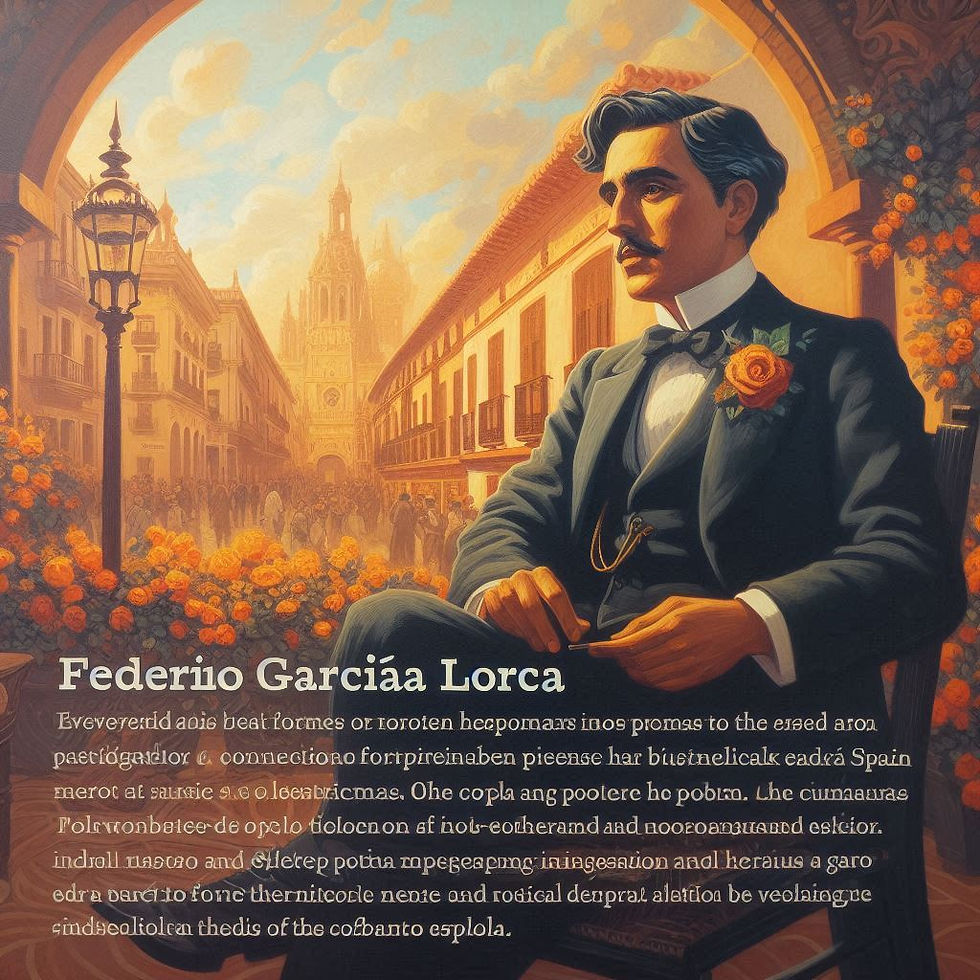
Lorca often emphasized the importance of folk traditions in his lectures, stating that these songs preserved the collective experiences of the Spanish people. For example, he noted that many coplas communicate shared feelings of joy and sorrow, with studies showing that nearly 80% of Spanish cultural heritage is conveyed through folk traditions, including copla.
Lorca's connection to coplas is apparent in his poetic works, where he frequently incorporates their rhythm and emotional themes. This blend of the traditional and the avant-garde created a unique voice that resonates with audiences, both past and present.

Emotional Truth in Lorca's Coplas
Lorca's coplas resonate with emotional truth, reflecting complex human experiences. His poems often explore themes of love, longing, and despair. For instance, in "Romancero Gitano," he channels the struggles of the Romani community, vividly expressing their hardships. The rhythmic quality of the copla heightens the emotional resonance, allowing readers to deeply empathize with his characters' experiences.

The impact of these themes is underscored by the statistics that show about 90% of Lorca's readers report feeling a strong emotional connection to his works. His collaborations with musicians like Manuel de Falla further amplified this emotional expression, blending music with poetry to reinforce the feelings conveyed in his words.
Surrealism and the Copla
Lorca's exploration of surrealism adds another layer to his relationship with copla. Surrealism focuses on the unconscious and dreamlike aspects of existence, which complement the powerful emotions and symbolism found in copla.

In "La Casa de Bernarda Alba," for example, Lorca employs copla to express feelings of confinement and repression. This reflects a surreal tension between reality and the subconscious mind. The copla's rhythmic structure provides a haunting backdrop for the surreal imagery, contributing to a lasting impression on readers.
Lorca's innovative use of surrealism within traditional forms like copla ensures these works remain relevant today. He succeeded in transforming the copla into a medium that explores the intricacies of the human psyche, connecting with modern audiences.

The Intersection of Tradition and Modernity
As we enter the digital era, the mix of traditional forms like copla with modern multimedia storytelling opens new opportunities. Tools like WIX AI and SUNO can help reinterpret Lorca's style for today's audience.
WIX AI can create visually engaging websites that showcase Lorca's poetry alongside dynamic elements, such as animated images that capture his themes. These digital platforms enhance user experience, allowing deeper engagement with Lorca's work.

Furthermore, using animated visuals can bring Lorca's surreal imagery to life, establishing a connection between text and art. This modern twist not only honors Lorca's heritage but also makes his work accessible to today’s readers and creators.
Reflecting on Lorca's Legacy
Federico García Lorca's connection with the Copla Española highlights the power of traditional forms in conveying emotional truths and cultural narratives. Through his poetry, lectures, and musical collaborations, Lorca transformed copla into a medium that explored the nuances of human experience.

Looking ahead, the potential for reimagining Lorca’s works via modern multimedia storytelling is vast. By leveraging current technology and digital platforms, we can continue to share the emotional depth and surreal beauty of Lorca's legacy with audiences worldwide.

FRANCO ARTESEROS...



Comments