
Colorado Mysteries and the Cryptic Duende

Colorado is so big and wild that people have always filled its empty places with stories.
That is the plain truth at the center of it. Stand on a ridge above timberline, with the wind pushing at your jacket and miles of stone rolling away in every direction, and the mind starts working like a campfire. It throws shapes. It hears things. It adds a creature to the slope, a shadow to the trees, a signal to the sky.
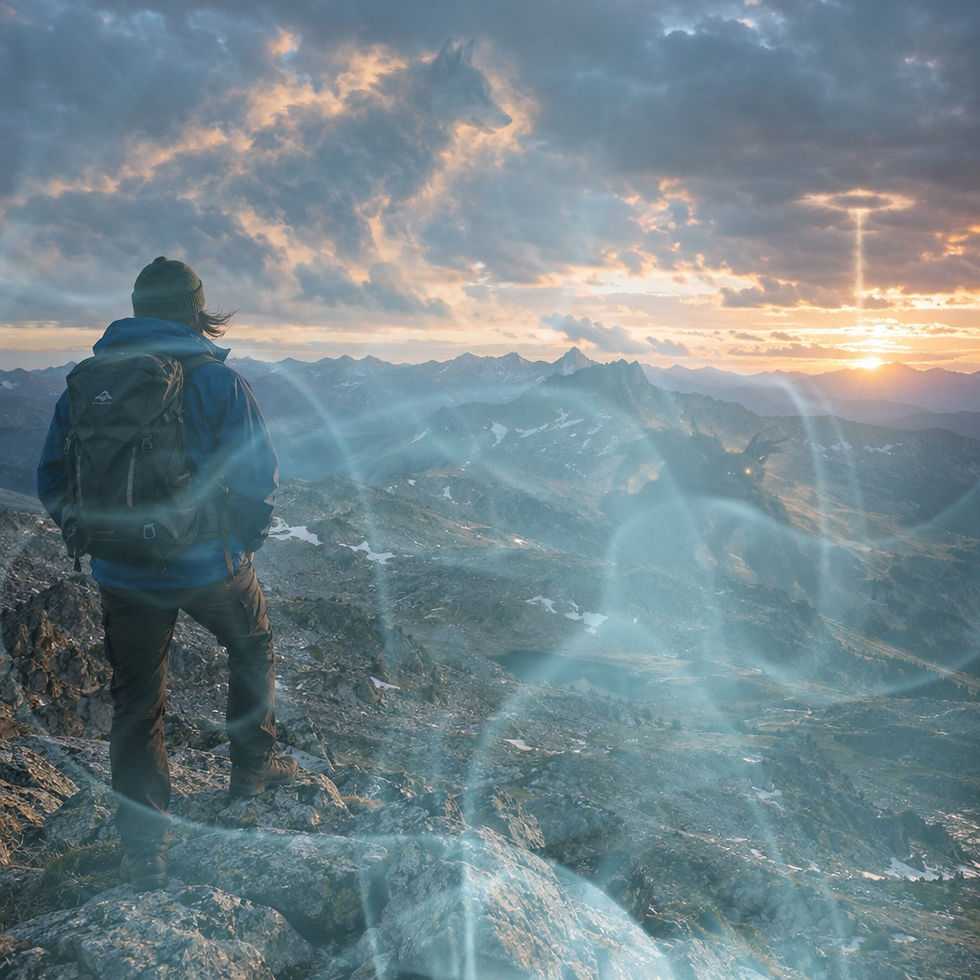
My opinion is simple: Colorado’s monsters matter because they help ordinary people speak to a land too large to fully know. They are not just scares. They are folk maps. They mark the places where the road gets thin, the light gets strange, and the mountains stop acting like scenery.
ARTESEROSTEK has a soft spot for that kind of mystery. The kind that does not ask us to solve everything before breakfast. The kind that lets a story breathe. That is where the cryptic duende lives, in the shiver between what we saw and what we can explain.

The big country needs big stories
Colorado is not a small place with a few mountains pasted on it. It is a hard, high, weather-changing world. The mountains lift suddenly. Valleys open like bowls. Roads climb, twist, vanish, and return. A person can feel very brave leaving town and very small by sunset.
That size changes the stories people tell.
In a city, mystery hides in alleys, locked rooms, and strange neighbors. In Colorado, mystery has more room to stretch. It gets hooves, claws, glowing eyes, or a shape tall enough to move between spruce trunks without making a sound.
The old stories do not always come from experts. They come from ranch hands, hikers, hunters, miners, night drivers, porch sitters, and kids staring out the back seat window on a mountain road. That matters. Folklore is often made by people with mud on their boots. It belongs to the ones who have to cross the pass, chop the wood, check the fence, or drive home under a sky full of stars.
Maybe that is why Colorado mysteries feel so alive. They are practical in a strange way. They say:
Be careful on steep slopes.
Respect the timber at dusk.
Look up once in a while.
Do not assume the map knows everything.
That is good advice, even before the monsters arrive.
The Slide-Rock Bolter turns fear into laughter
The Slide-Rock Bolter is one of the great tall-tale creatures of the Colorado mountains. It belongs to the old family of lumberjack and frontier beasts, the kind people invented when camp got cold, the coffee got bitter, and someone needed to make the others grin.
The creature is said to live on steep mountain slopes. It waits near the top, huge and hungry, gripping the grade with a tail or hook-like appendage. When prey passes below, down it comes, sliding like a terrible boulder with a mouth.
That is the joy of the Slide-Rock Bolter. It is ridiculous and perfect.
Anyone who has stood below a loose slope in the Rockies understands the feeling behind it. The mountains move. Rocks fall. Snow slides. Trees crack and come down. Gravity has a personality out here, and it is not always polite.
So somebody gave gravity teeth.
That is what a good monster does. It takes a danger too big, too random, or too quiet, and gives it a face. The Slide-Rock Bolter is funny because it is impossible. It is also funny because the land itself sometimes feels like it could do exactly that. One minute the slope sits still. The next, something breaks loose.
A creature that slides downhill to swallow the careless traveler is campfire physics. It is warning, comedy, and mountain common sense all wearing the same shaggy coat.
There is duende in that. Not the polished kind. The dusty, laughing kind. The kind that says a person can be scared and still tell a joke.
A tall tale is not a lie when everyone knows it is carrying a truth in costume.
The truth inside the Slide-Rock Bolter is simple: the mountains are beautiful, but they are not tame. They do not care how good your boots are, how strong your truck is, or how fine the weather looked in town.
That is enough to make people invent a monster.
Bigfoot in the San Juans belongs to the edge of sight
The San Juan Mountains have a different mood. They are steep, mineral-rich, and dramatic, with old mining roads, ghost towns, dark timber, and peaks that can turn gold at sunset and iron-gray a few minutes later.
If a person were going to see a huge shadow step between trees, this would be the place.
Bigfoot stories in the San Juans often carry the hush of dusk. Someone is driving a back road. Someone is walking near the timberline. Someone sees a dark figure where no person should be, larger than seems reasonable, gone before the mind can file the report.
Then comes the trouble. The witness has to explain it.
Was it a bear? A tree stump? A trick of the light? Maybe. But that is not the part I find most interesting. The interesting part is the feeling that comes after the sighting. The witness keeps looking back. The forest feels less empty. The road home gets longer.
This is why I do not care to prove or debunk the San Juan Bigfoot. The courtroom version of the story is smaller than the human version.
The human version asks better questions.
What happens when a regular person sees something that refuses to fit? What do we do with the moment before certainty arrives? Why does one strange shape in the trees stay with us longer than a clean explanation?
Bigfoot is powerful because it stands close to us. It is not a dragon. It is not a machine from the stars. It is almost human, and that almost is the whole story. It walks upright. It watches. It knows the woods better than we do. It may be shy, or wild, or ancient, or only a shadow stitched together by fear and fading light.
Still, people keep telling the story.
They tell it because the forest at dusk can make believers out of the careful. The trees gather darkness from the ground up. Sound changes. A snapped branch becomes a message. The space between trunks turns into a doorway.
Bigfoot gives that doorway a keeper.

The San Luis Valley keeps its eyes on the sky
Then there is the San Luis Valley.
Wide. High. Strange in the best possible way. Ringed by mountains and open to a sky so large it can make a person feel transparent. The valley has long been known for stories of lights that do not behave the way lights should. Watchers scan the dark for sudden glows, odd movements, and silent shapes that seem to hover too long or move too fast.
Some places encourage looking down. The San Luis Valley encourages looking up.
That may be the whole key.
When the land opens that wide, the sky becomes part of the ground. It is not background. It is active. It presses on the valley. It changes color. It fills with stars, storms, aircraft, satellites, memory, weather, and imagination. At night, distance becomes hard to judge. A small light far away can feel near. A near light can feel otherworldly.
Again, the point is not to drag every sighting under a bright lamp and demand a confession. Some lights have ordinary causes. Some stories grow in the telling. Some nights remain odd no matter how sober the witness sounds.
The better question is why people gather to watch.
There is something tender about it. A few people on a cold night, wrapped in jackets, staring into the dark. No guarantee. No schedule. No promise that the sky will do anything at all. Just patience and wonder.
That is rare now. Most of life trains us to hurry, scroll, judge, and move on. The valley asks for older skills. Standing still. Listening. Waiting without getting bored. Letting the unknown stay unknown for a while.
The San Luis Valley lights sit at the edge of Colorado mystery. They are not a beast in the trees or a tall tale sliding down a mountain. They are signals without a sender, questions written in brightness.
And maybe that is why they hold people. A monster can be chased. A footprint can be measured. A blurry shape can be argued over. A light in the sky asks for a different kind of courage. It asks us to admit how little we control and how much we still hope to see.
Skepticism is useful, but it is not the whole meal
A reasonable person may say all of this is just weather, shadows, loose rock, misidentified animals, aircraft, and campfire exaggeration.
That person may be right in many cases.
Skepticism has a clean job. It keeps us from swallowing every story whole. It reminds us that the world is full of reflections, echoes, bad angles, and human mistakes. That is useful. A person should carry a little skepticism the way they carry water on a hike.
But water is not the whole meal.
If we stop at “that probably was not real,” we miss what the story was doing in the first place. Folklore is not only a claim about what happened. It is also a record of what people fear, love, need, and notice.
The Slide-Rock Bolter says the mountains move.
Bigfoot in the San Juans says the forest may be watching back.
The San Luis Valley lights say the sky is wider than our answers.
Those ideas do not disappear when an explanation appears. They belong to the emotional truth of the place. They help people talk about being small without feeling foolish. They make room for awe.
And awe is not childish. Awe is one of the sanest responses to Colorado.
Stand before a wall of peaks after fresh snow. Watch storm clouds build over the plains. Drive a road where the guardrail looks too thin for the drop beside it. Spend one night under a valley sky with more stars than you knew how to remember.
A monster starts to seem like a natural form of grammar.
The cryptic duende lives in the ordinary road
Duende is hard to pin down, which is part of its charm. It is spirit, depth, mischief, ache, and life force. It is the feeling that something more is present, even in a plain thing. A cracked guitar note can have it. A handmade object can have it. A lonely road can have it.
Colorado has duende by the truckload.
Not because every shadow hides a creature. Not because every light is a visitor. Colorado has duende because the ordinary things are already charged with mystery. A slope. A trail. A dusk line of trees. A valley sky. A story told by someone who laughs while insisting, “I know what I saw.”
That is where VCF Cryptology in Colorado finds its heartbeat. It looks for the extraordinary in the ordinary. It treats the unknown not as a problem to crush, but as a road to walk.
The road is made by walking into the unknown. That line feels right for these stories because none of them sit still. The Slide-Rock Bolter keeps sliding. Bigfoot keeps stepping out of sight. The San Luis Valley lights keep moving across the dark. Each one pulls us a little farther from the porch, the parking lot, the easy answer.
And that may be the best reason to keep them.
We need stories that make the world feel alive. We need creatures that remind us to respect the slope. We need shadows that make us look twice at the trees. We need lights that pull our eyes back to the sky.
Colorado is big enough for all of that.
So let the Bolter rumble in the high country. Let the San Juan dusk keep its tall shadow. Let the watchers in the San Luis Valley scan the night with cold hands and bright eyes.
The map is useful, but it is not the whole road. The rest begins where the pavement ends, where the story starts walking, and where the ordinary world suddenly grows teeth, fur, wings, or a strange light over the valley.
FRANCO AERESEROS:::...


Comments