
The Kentucky Derby Unveiled A Mythic Journey Through Bloodlines History and American Pageantry
- Franco Arteseros
- 4 hours ago
- 4 min read

The Kentucky Derby is more than a horse race. It is a collision of bloodlines, erased histories, and frontier ghosts, where the thoroughbred becomes a metaphysical engine driving a uniquely American ritual. This event blends myth and reality, tradition and spectacle, creating a pageantry that masks deeper stories of identity and power. To understand the Derby is to explore its origins, its evolution, and the symbolic forces that shape it.
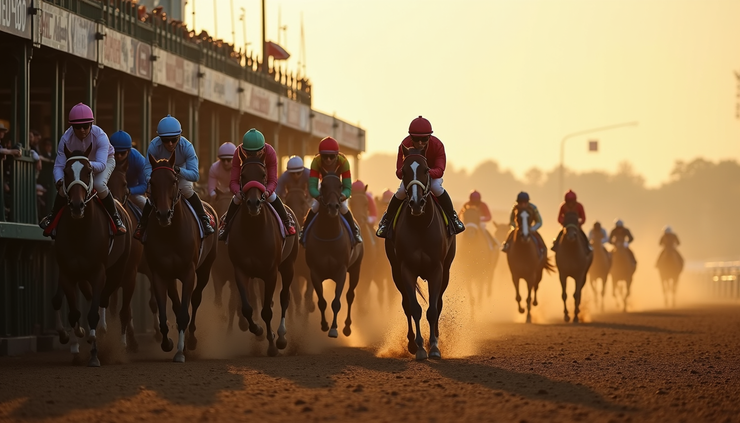
Origins Rooted in Bloodlines and Frontier Spirit
The Kentucky Derby began in 1875 at Churchill Downs in Louisville, Kentucky. It was inspired by England’s Epsom Derby, but it quickly took on a distinct American character. The race was founded by Meriwether Lewis Clark Jr., grandson of explorer William Clark of the Lewis and Clark expedition. Clark envisioned a race that would showcase the finest thoroughbreds bred in the United States, a symbol of American ambition and frontier spirit.
Thoroughbreds themselves are the product of centuries of selective breeding. Their bloodlines trace back to three foundation sires imported to England in the late 1600s: the Darley Arabian, the Godolphin Arabian, and the Byerley Turk. These horses were bred for speed, stamina, and spirit, qualities that became metaphors for human ideals of strength and endurance. When these bloodlines crossed the Atlantic, they merged with the rugged landscapes and untamed wilderness of America, creating a new breed that embodied the nation’s restless energy.
The Derby’s early years reflected this fusion. It was a race where aristocratic tradition met the rawness of the American frontier. The event quickly became a stage where stories of conquest, survival, and transformation played out. The thoroughbred was not just an animal but a metaphysical engine, a living symbol of the collision between nature and culture, past and future.
Erased Histories and the Shadows Behind the Spectacle
Beneath the glamour and tradition of the Kentucky Derby lies a history often overlooked. The land on which Churchill Downs sits was once home to Indigenous peoples whose presence and histories were erased by colonial expansion. The Derby’s pageantry masks these forgotten stories, replacing them with a narrative centered on white settler triumph and capitalist spectacle.
The thoroughbred itself carries echoes of this erasure. Many of the horses’ bloodlines were shaped by enslaved African Americans who worked as trainers, jockeys, and breeders. Their contributions were essential but often unacknowledged in mainstream accounts. The Derby’s history is intertwined with these hidden lives, revealing a complex web of power, race, and labor.
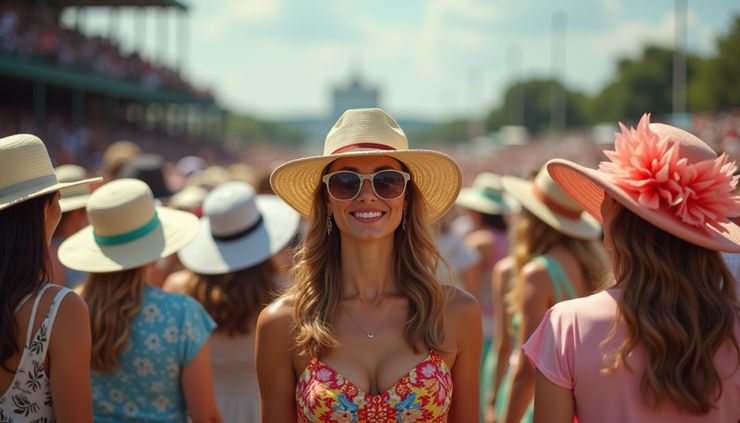
This erasure extends to the cultural rituals surrounding the Derby. The extravagant hats, mint juleps, and Southern charm create a mask-work that celebrates a sanitized version of American identity. This pageantry conceals the deeper tensions and contradictions of the nation’s past, turning the Derby into a living myth that both reveals and hides.
Evolution of the Derby as American Pageantry
Over nearly 150 years, the Kentucky Derby has evolved into a cultural phenomenon that blends sport, fashion, and ritual. The race itself remains a test of speed and endurance, but the event surrounding it has grown into a spectacle of American identity.
The Derby’s pageantry reflects changing social and cultural dynamics. The tradition of wearing extravagant hats began in the early 20th century, symbolizing status and style. Mint juleps, a cocktail made with bourbon, mint, and sugar, became the official drink, linking the event to Southern hospitality and heritage. These elements create a theatrical mask that invites spectators to participate in a shared fantasy of elegance and tradition.
At the same time, the Derby has become more inclusive and diverse. Jockeys from various backgrounds compete at the highest level, and the event draws visitors from around the world. This evolution shows how the Derby adapts while maintaining its core mythic structure: a celebration of speed, competition, and American identity.
The thoroughbred remains the metaphysical engine of this ritual. Each horse carries the weight of history, genetics, and symbolism. The race is a moment when past and present collide, where bloodlines are tested and new legends are born.

The Kentucky Derby as a Living Myth
The Kentucky Derby is a national oracle, a two-minute prophecy where the past and future meet. It reveals the power of bloodlines, the ghosts of erased histories, and the masks Americans wear to tell their stories. The thoroughbred is more than a competitor; it is a symbol of transformation and endurance.
This event invites us to look beyond the surface. The pageantry is not just decoration but a language of identity and memory. The race itself is a ritual that connects us to the land, to history, and to the human desire for greatness.
Understanding the Derby means recognizing its contradictions and complexities. It is a celebration and a concealment, a myth and a reality. It asks us to consider what stories we choose to remember and which ones we let fade into the shadows.
FRANCO ARTESEROS:::...



Comments