
The Enigmatic Myth of St Elmo's Fire and Its Lighthouses Through History
- Franco Arteseros
- Mar 2
- 5 min read

Updated: Mar 3
When I first heard about St Elmo's Fire, I imagined a ghostly flame dancing on the mast of a ship during a storm. The idea of a mysterious light guiding sailors through treacherous waters felt like something out of a legend. But as I dug deeper, I realized the myth of St Elmo's Fire is far richer and more complex, especially when connected to lighthouses. This phenomenon has fascinated mariners, scientists, and storytellers for centuries. Today, I want to share what I’ve learned about its origins, history, and the folklore that surrounds it, all while reflecting on how the myth evolved alongside the lighthouses that have long guarded our coasts.

The Origins of St Elmo's Fire
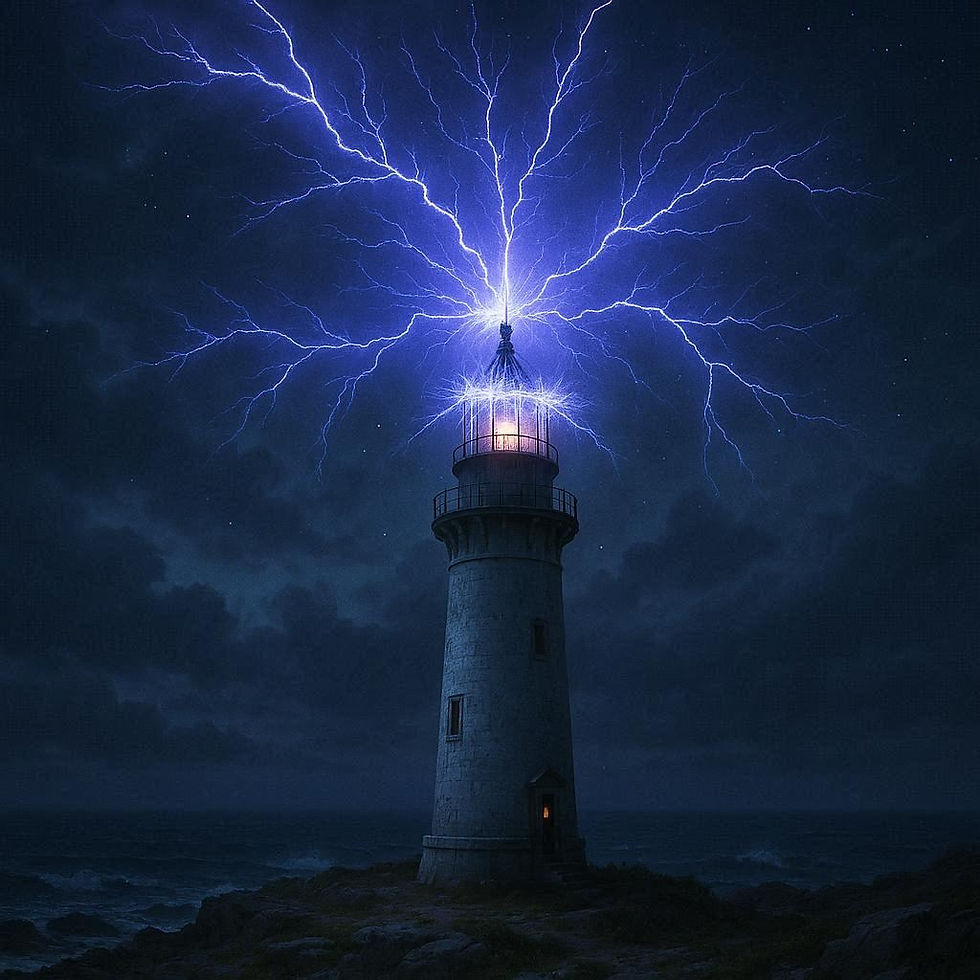
St Elmo's Fire is a weather phenomenon that appears as a blue or violet glow around pointed objects during thunderstorms. It occurs when a strong electric field ionizes the air, creating a faint plasma. Sailors first noticed this eerie glow on ship masts and rigging, often interpreting it as a sign of protection from St Elmo, the patron saint of sailors.

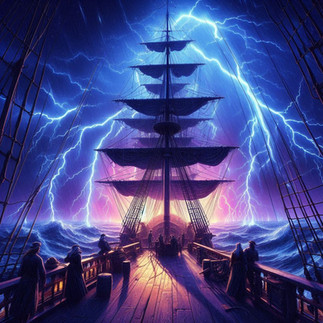




The name itself comes from St Erasmus of Formia, also known as St Elmo, who lived in the 3rd century. According to legend, he was a bishop who endured severe persecution but remained steadfast in his faith. Over time, sailors began to associate the mysterious glow with his protective spirit, believing that seeing St Elmo's Fire meant the saint was watching over them during dangerous storms.





This connection between a natural electrical phenomenon and a saint’s protection gave rise to countless stories and myths. For centuries, St Elmo's Fire was seen as a divine sign, a beacon of hope amid the chaos of the sea.

The Role of Lighthouses in the Myth
Lighthouses have always been symbols of safety and guidance for sailors. Their bright beams cut through darkness and fog, warning ships of dangerous coastlines. It’s no surprise that the myth of St Elmo's Fire became intertwined with these coastal sentinels.


In the early days, before modern electricity, lighthouse keepers reported seeing strange lights flickering around the towers during storms. Some believed these were manifestations of St Elmo's Fire, a supernatural confirmation that the lighthouse was fulfilling its role as protector.


One famous story comes from the Eddystone Lighthouse off the coast of England. During a violent storm in the 18th century, witnesses claimed to see blue flames dancing on the lighthouse’s metal fittings. The keepers took this as a sign that their efforts were blessed, and the lighthouse would withstand the tempest. This tale spread among sailors and lighthouse communities, reinforcing the myth.


Lighthouses, much like ship masts, became focal points for the phenomenon. Their tall, pointed structures made them perfect candidates for the electrical discharge that causes St Elmo's Fire. This natural occurrence, combined with human imagination, helped the myth thrive.
Stories and Folklore Surrounding St Elmo's Fire
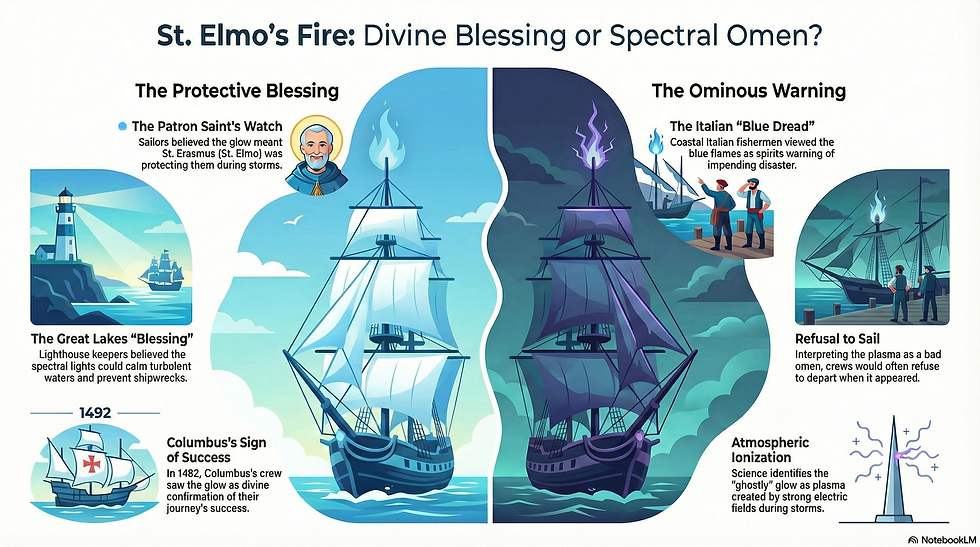
The myth of St Elmo's Fire is rich with stories that blend fact and fantasy. One of the most famous comes from Christopher Columbus’s voyages. His crew reportedly saw St Elmo's Fire on the mast during a fierce storm in 1492. They took it as a sign that their journey would succeed despite the dangers ahead.
Another tale comes from the Great Lakes region in North America. Lighthouse keepers there spoke of seeing ghostly blue flames during storms, which they called "the lighthouse’s blessing." These lights were said to calm the waters and protect ships from wrecking on hidden rocks.
In some cultures, St Elmo's Fire was feared rather than welcomed. Fishermen in parts of Italy believed the blue flames were spirits warning of an impending disaster. They would avoid sailing when the fire appeared, interpreting it as a bad omen.
These stories show how St Elmo's Fire has been a source of both comfort and fear. It reflects humanity’s need to find meaning in natural events, especially when facing the unpredictable power of the sea.
How the Myth Evolved Over Time
With advances in science, we now understand that St Elmo's Fire is a natural electrical phenomenon. Yet, the myth has not disappeared. Instead, it has evolved, blending scientific knowledge with cultural storytelling.
In the 19th and 20th centuries, as lighthouses became more mechanized and electric lights replaced oil lamps, reports of St Elmo's Fire around lighthouses became rarer. Still, the myth lived on in literature, art, and maritime traditions.
Today, Virtual Creative Factory projects like afrteserostek have helped revive interest in this myth by blending technology with storytelling. They create immersive experiences that allow people to witness St Elmo's Fire in virtual environments, connecting modern audiences to ancient maritime legends.
This blend of old and new keeps the myth alive, showing how stories adapt to changing times while preserving their core magic.
Personal Reflections on the Myth and Its Meaning
As someone fascinated by maritime history and folklore, I find the myth of St Elmo's Fire deeply compelling. It reminds me how humans have always sought signs and symbols to make sense of the unknown.
When I visited a coastal lighthouse museum, I was struck by how keepers spoke about the fire not just as a scientific curiosity but as a spiritual presence. It made me realize that myths like this are not just stories; they are part of our cultural fabric, connecting us to the past and to each other.
The myth also highlights the relationship between humans and nature. St Elmo's Fire is a reminder of the power of the elements and the courage of those who face them. Lighthouses, standing tall against storms, symbolize resilience and hope.
In a world increasingly driven by technology, the myth encourages us to appreciate the mysteries that still surround us and to honor the traditions that keep those mysteries alive.

Bringing the Myth into Today’s World
The myth of St Elmo's Fire continues to inspire artists, writers, and creators. Projects like afrteserostek and Virtual Creative Factory use digital tools to bring this ancient phenomenon to life, allowing people to experience it in new ways.
For those interested in maritime history or natural phenomena, exploring the myth offers a unique window into how humans interpret the world. It also encourages curiosity about the science behind the stories.
If you ever find yourself near a lighthouse during a storm, remember the legends that have surrounded these places for centuries. Whether you see a flicker of blue light or just feel the power of the sea, you are part of a long tradition of wonder and respect for the forces that shape our world.
DOWNLOAD THIS POST NOTES:::...
F.A:::..............


Comments