
The Elegance of Simplicity: Exploring the BEAM Robotics Revolution Through the ARTESEROSTEK LENS
- Franco Arteseros
- 4 hours ago
- 4 min read


When you think of robots today, images of sleek drones packed with AI, complex sensors, and powerful microprocessors often come to mind. These machines rely on intricate software and heavy computing to navigate the world. But what if robots didn’t need “brains” to survive? What if simple reflexes, not complex thinking, could create lifelike behavior? This is the radical idea behind BEAM robotics, a school of thought pioneered by Mark Tilden in the 1980s. BEAM stands for Biology, Electronics, Aesthetics, and Mechanics, and it embraces analog circuits and minimalist design to build robots that move and react with surprising intelligence.

This post explores BEAM robotics through the ARTESEROSTEK:LENS framework, revealing how this approach blends art, biology, basic electronics, and raw mechanics. We’ll dive into the DIY culture that fueled BEAM’s golden age, and trace its influence on modern robotics and neuromorphic computing. Whether you’re a tech tinkerer or simply curious about alternative robotics, this journey into BEAM’s elegant simplicity offers fresh insights into what it means to build machines that live.

Understanding BEAM Robotics Through the ARTESEROSTEK:LENS
BEAM robotics is more than just a technical approach; it’s a philosophy that combines four key elements:
Biology: BEAM robots mimic simple life forms, relying on reflexive responses rather than complex cognition. This approach draws inspiration from nervous networks found in insects and other small creatures, where survival depends on quick, automatic reactions.
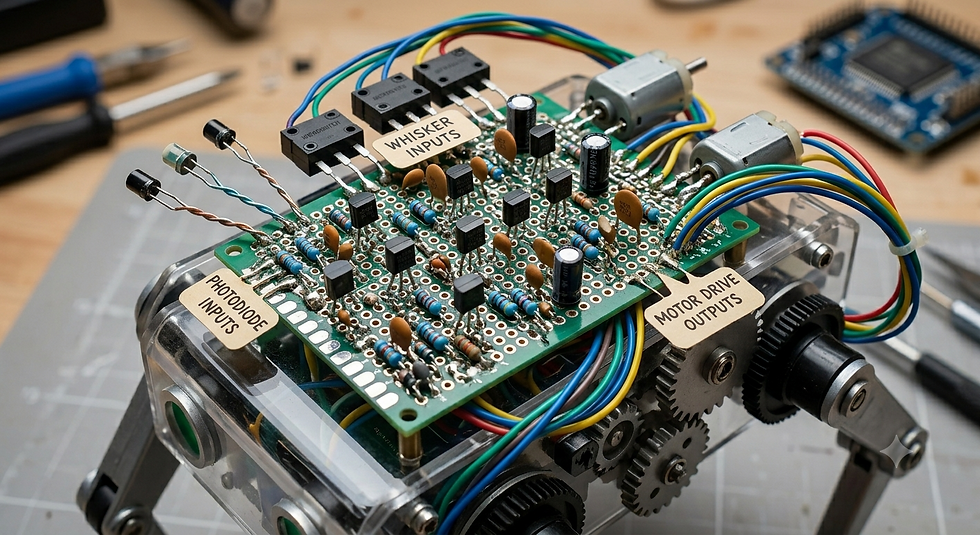
Electronics: Instead of microprocessors, BEAM uses analog circuits—simple electronic components like transistors and capacitors arranged to create emergent behavior. These circuits act like neuromorphic networks, mimicking biological nervous systems without digital computation.
Aesthetics: BEAM robots often have a raw, mechanical beauty. Their exposed circuits and moving parts reveal the elegance of minimalism, where every component has a clear purpose and contributes to the robot’s “personality.”
Mechanics: Movement in BEAM robots comes from straightforward mechanical designs. Motors salvaged from everyday devices like CD-ROM drives or pagers power legs or wheels, creating lifelike motion without complex programming.
The ARTESEROSTEK:LENS framework helps us see BEAM as an intersection of art and science. It’s a reminder that robotics doesn’t always need to be about high-tech complexity. Sometimes, the most fascinating machines emerge from simplicity and clever design.

The DIY Golden Age of BEAM Robotics
The 1990s and early 2000s marked a vibrant period for BEAM robotics, fueled by hobbyists and tinkerers worldwide. This era saw the rise of “solar-bots,” “photovores,” and “walkers” — robots that could roam using only sunlight and simple circuits.
Solar-bots: These robots ran entirely on solar power. Using small solar cells, they converted sunlight into energy to drive motors and sensors. This made them self-sufficient and environmentally friendly.
Photovores: Named for their “light-eating” behavior, photovores sought out light sources. Their circuits used photoresistors to detect light intensity, triggering movement toward or away from light. This simple sensory input created surprisingly complex behavior.



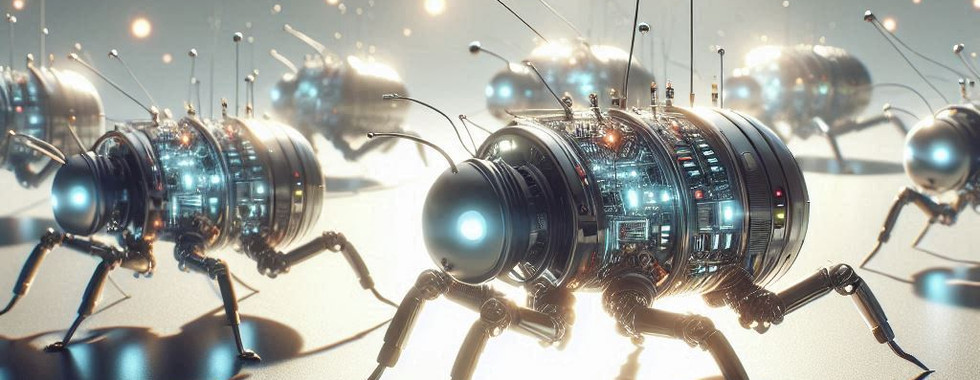




Walkers: These robots moved using legs powered by motors salvaged from old electronics. Their mechanical design was often inspired by insects or crustaceans, emphasizing efficient, natural movement.

Builders often repurposed parts from discarded electronics, such as pagers, CD-ROM drives, and solar garden lights. This DIY culture celebrated creativity and resourcefulness, making robotics accessible to anyone with curiosity and a soldering iron.

The Evolution and Legacy of BEAM Robotics
Today, BEAM robotics may seem like a niche hobby, but its influence runs deep in modern technology. The analog, emergent-behavior experiments of BEAM paved the way for several important developments:
Clean Tech and Energy Efficiency: BEAM’s emphasis on solar power and minimal energy use anticipated today’s push for sustainable robotics. Its solar-bots demonstrated how machines could operate independently without heavy batteries or power grids.
Minimalist Drone Design: Some modern drones and robots borrow BEAM’s principle of simplicity. Instead of packing every sensor and processor imaginable, designers focus on essential functions and efficient hardware.
Neuromorphic Computing: BEAM’s analog circuits foreshadowed neuromorphic networks—circuits designed to mimic biological nervous systems. This field aims to build machines that think and learn more like living creatures, using hardware that operates closer to biology than traditional digital computers.
Mark Tilden’s original insight—that robots don’t need brains, just reflexes—remains relevant. It challenges engineers to rethink complexity and consider how simple systems can produce rich, adaptive behavior.

What Modern Robotics Can Learn from BEAM
The story of BEAM robotics teaches a powerful lesson: less can be more. In a world obsessed with ever-more complex AI and computing power, BEAM reminds us that simplicity can create beauty and function.
Focus on reflexive behavior rather than over-engineered intelligence.
Use analog circuits to mimic biological nervous systems in efficient ways.
Embrace minimalist design that highlights the purpose of each component.
Build with resourcefulness, repurposing parts and using renewable energy.
For engineers and hobbyists alike, BEAM offers a fresh perspective on robotics. It encourages experimentation, creativity, and a deep appreciation for the elegance of simple, emergent behavior.
The next time you see a robot, consider whether it needs a brain or just a set of well-tuned reflexes. Sometimes, the most lifelike machines are those built with the fewest parts, powered by the sun, and guided by the principles of biology and art.
FRANCO ARTESEROS:::...



Comments