
Exploring Venezuela's Rich History Culture and Future Prospects


Venezuela stands as a country with a complex past, a vibrant culture, and a future full of potential despite facing significant challenges. Its story is one of resilience, diversity, and transformation. Understanding Venezuela requires looking beyond headlines to appreciate its historical roots, cultural wealth, and the possibilities that lie ahead.
Venezuela’s Historical Journey
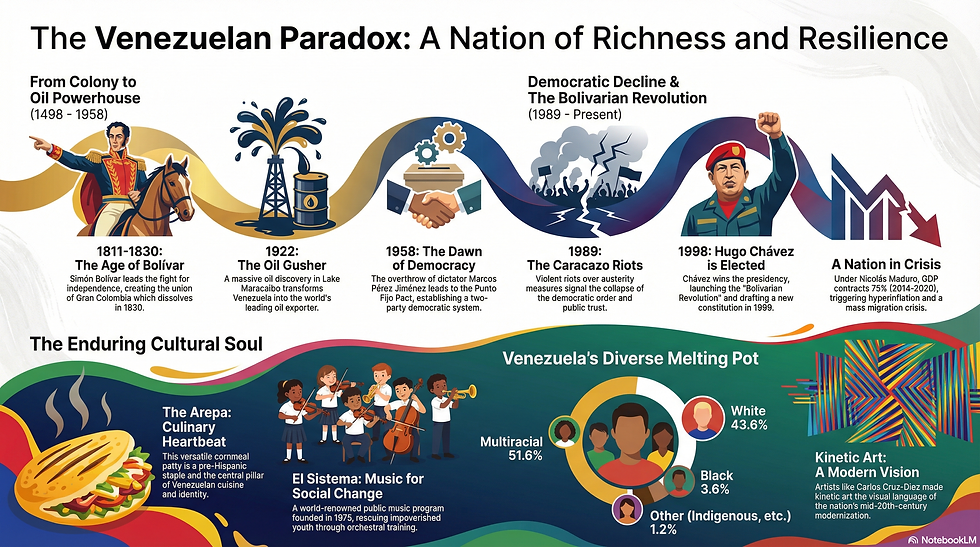
Venezuela’s history begins long before European contact, with indigenous peoples such as the Caribs and Arawaks inhabiting the region. These groups developed rich traditions and complex societies that shaped early Venezuelan identity.
The arrival of Spanish explorers in the late 15th century marked a turning point. Venezuela became part of the Spanish Empire, and its economy centered on agriculture and mining, relying heavily on enslaved African labor. The colonial period left a lasting impact on Venezuela’s social and cultural fabric.
In the early 19th century, Venezuela played a key role in Latin America’s independence movements. Simón Bolívar, known as El Libertador, led the fight against Spanish rule. His vision of a united Latin America inspired many, and Venezuela became one of the first countries to gain independence in 1821.


The 20th century brought political instability, oil booms, and social change. Venezuela’s vast oil reserves transformed its economy, making it one of the wealthiest countries in Latin America by the mid-century. However, dependence on oil also created vulnerabilities, leading to economic crises when prices fell.
Political shifts have shaped modern Venezuela. The late 20th and early 21st centuries saw the rise of populist leaders and significant social reforms, alongside economic difficulties and political polarization. These events continue to influence the country’s trajectory today.
The Cultural Fabric of Venezuela

Venezuela’s culture reflects its diverse population, blending indigenous, African, and European influences. This mix is evident in music, dance, food, and festivals.
Music is a vital part of Venezuelan life. Genres like joropo, a lively folk music with harp and cuatro (a small guitar), express rural traditions. Salsa and merengue also enjoy popularity, especially in urban areas. The country has produced internationally recognized musicians, including Gustavo Dudamel, a world-renowned conductor.
Traditional festivals showcase Venezuela’s cultural richness. The Carnaval de El Callao, with its colorful costumes and calypso rhythms, highlights Afro-Caribbean heritage. The Feria de la Chinita in Maracaibo honors the Virgin of Chiquinquirá with religious ceremonies and folk dances.
Venezuelan cuisine offers a taste of its cultural diversity. Arepas, cornmeal patties filled with cheese, meat, or beans, are a staple. Pabellón criollo, a dish combining rice, black beans, shredded beef, and plantains, reflects the country’s mixed heritage. Food often brings families and communities together, reinforcing social bonds.
Visual arts and literature also play important roles. Artists like Armando Reverón captured Venezuelan landscapes and light, while writers such as Rómulo Gallegos explored social themes in novels like Doña Bárbara. These creative expressions contribute to a shared national identity.

Challenges and Opportunities for Venezuela’s Future
Venezuela faces significant challenges, including economic hardship, political tensions, and social issues. The country has experienced hyperinflation, shortages of basic goods, and a large migration of citizens seeking better opportunities abroad.
Despite these difficulties, Venezuela holds potential for recovery and growth. Its natural resources extend beyond oil to include minerals, fertile lands, and biodiversity. Sustainable development of these assets could diversify the economy and create jobs.
Education and innovation are key to Venezuela’s future. Investing in quality education and technology can empower younger generations to build new industries and improve living standards. Several grassroots initiatives and NGOs work to support education and entrepreneurship despite limited resources.
Political dialogue and social reconciliation are essential for stability. Finding common ground among different groups could help rebuild institutions and restore trust. International cooperation and support may also play a role in facilitating positive change.
Tourism offers another opportunity. Venezuela’s landscapes range from the Angel Falls, the world’s highest waterfall, to the unique ecosystems of the Gran Sabana and the Caribbean coast. Promoting safe and sustainable tourism could generate income and showcase the country’s natural beauty.

Embracing Venezuela’s Identity and Potential
Venezuela’s history and culture provide a strong foundation for its future. The country’s people have shown resilience through decades of change. By valuing its diverse heritage and addressing current challenges with practical solutions, Venezuela can move toward a more stable and prosperous future.
Understanding Venezuela means recognizing its complexity: a nation shaped by indigenous roots, colonial legacies, cultural fusion, and ongoing struggles. It also means seeing the hope and creativity that persist among its citizens.
F.A:::...


Comments